



posted 16th September 2026
Why “What Do You Want to Do?” Can Be a Difficult Question When Someone Has Dementia
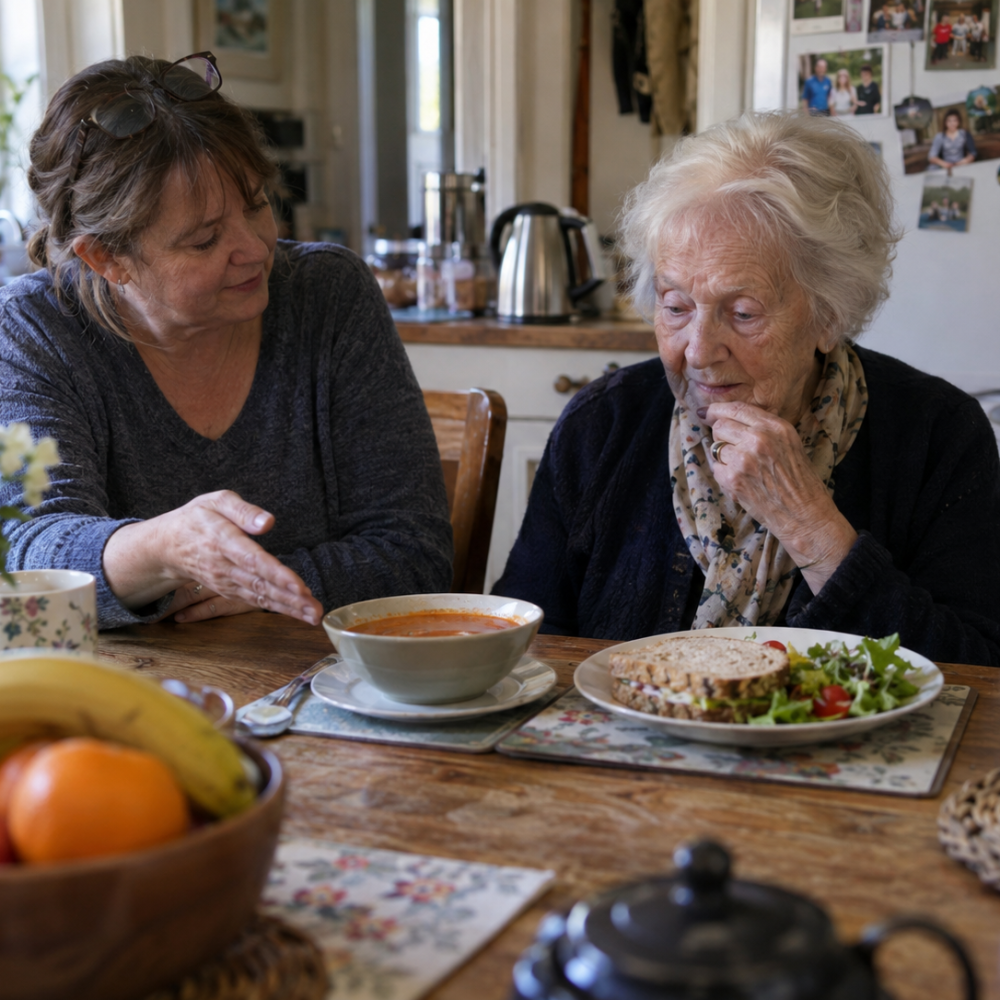
“What do you want for lunch, Mum?”
It sounds like a simple question. But sometimes the answer is silence. Or “I don’t know.” Or irritation. Or the familiar: “I’m not bothered.”
Families can understandably interpret this as Mum losing interest, becoming difficult, or simply not wanting to do anything.
But sometimes, the problem is not the activity, the food, or the person asking.
The problem is the question itself.
Key Takeaway: Open-ended questions can require a lot of cognitive processing. By making simple changes to how choices are presented, families can reduce overwhelm and help someone living with dementia stay involved in the decisions that shape their day.
Too Much Choice Can Become Hard Work
Think about what is actually involved in answering a question like:
“What would you like to do today?”
You may need to:
1. Remember what your options are.
2. Picture each choice in your mind.
3. Think about how you feel about each option.
4. Decide which one you prefer.
5. Put that decision into words.
For somebody living with dementia, that can require a lot of processing at once.
When the brain is already working harder to make sense of the day, an open-ended question can sometimes feel overwhelming.
The answer might become:
“Nothing.”
But “nothing” doesn't necessarily mean they don't want company, lunch, an activity, or a trip out.
Sometimes it simply means the choice needs to be presented differently.
Simple Communication Shifts: Try Two Clear Options
Instead of asking broad questions, try narrowing the focus to two clear choices.
• Instead of: “What would you like for lunch?”
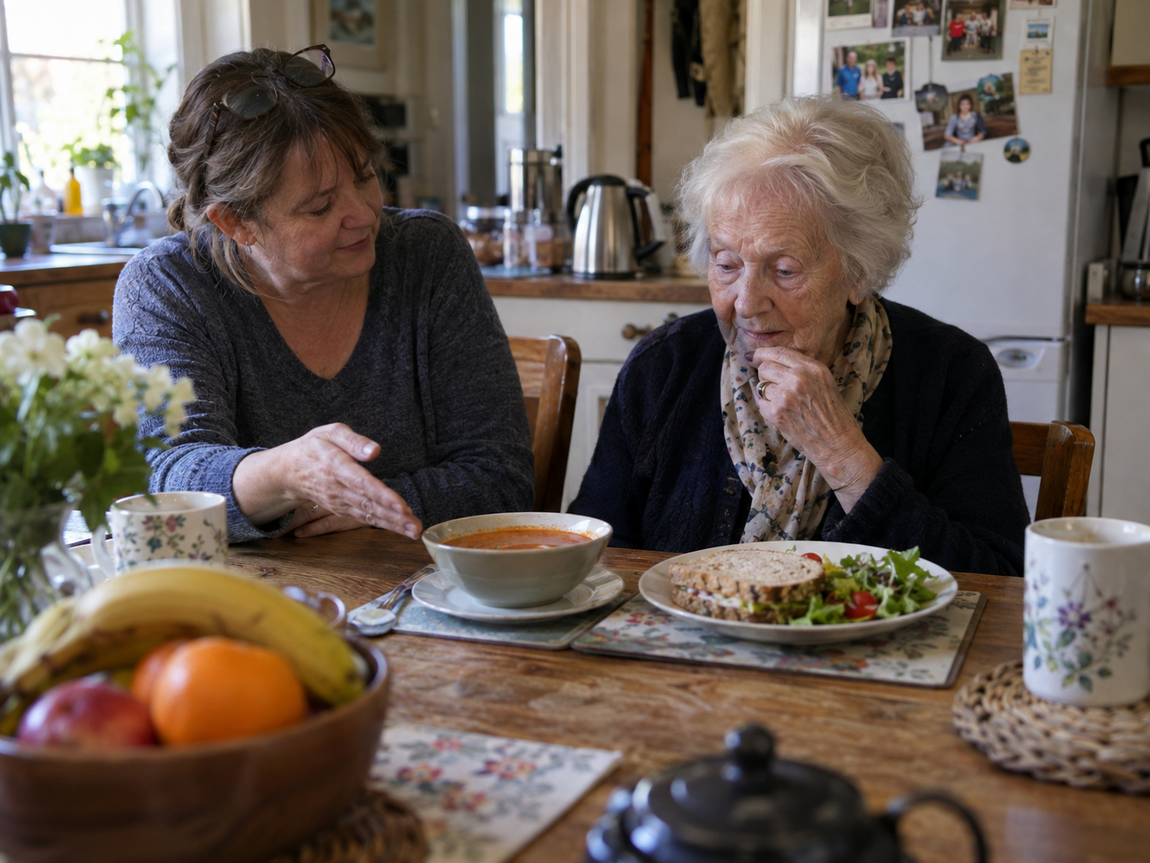
Try: “Would you like soup or a sandwich?”
• Instead of: “What do you want to wear?”
Try: “Would you like the blue top or the green one?”
• Instead of: “What shall we do today?”
Try: “Shall we have a cup of tea first, or would you like to go into the garden?”
The person still has a choice.
They still have control.
You have simply made the decision easier to manage.

Be Careful Not to Remove Choice Altogether
When someone starts finding decisions more difficult, it can be tempting for families to step in and decide everything.
- What they eat.
- What they wear.
- What they watch.
- Where they sit.
- Whether they go out.
- What happens next.
This usually comes from a place of love and a genuine desire to make life easier.
But needing help with decisions doesn't mean somebody has stopped having preferences.
The goal isn't to take over.
It's to adapt the way choices are offered so the person has the best opportunity to express what they want.
4 Ways to Make Decision-Making Easier
1. Show Rather Than Just Ask
Seeing an option can sometimes be easier than trying to imagine it.
For example:
• Food or drinks: Show two choices rather than listing several options.
• Clothing: Hold up two tops or cardigans side by side.
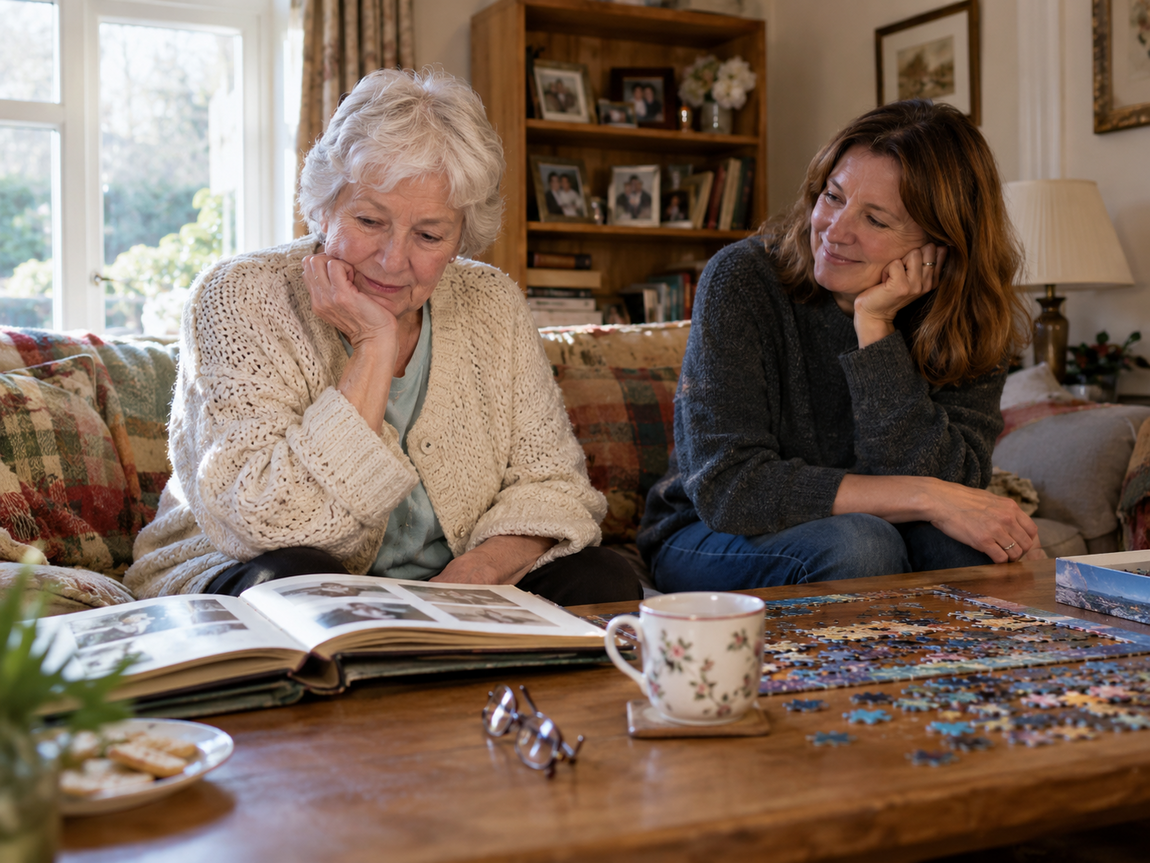
• Activities: Put the book, craft materials, photograph album or other activity where it can be seen.
A visual cue can make the decision more concrete and easier to understand.
2. Give Them Time to Answer
When somebody hesitates, our instinct is often to ask the question again.
Then rephrase it.
Then offer another suggestion.
Before long, there are five different pieces of information to process instead of one.
Ask the question clearly, then give them time.
A pause doesn't automatically mean they have not understood.
They may simply need longer to work out their answer.
3. Watch Non-Verbal Cues
Not every preference will be spoken.
Look for the quieter signs too.
Someone might:
• brighten when a particular song comes on
• reach towards a certain coat
• leave one food untouched but finish another
• move towards the door when their shoes or coat appear
• spend longer looking through photographs than doing a planned activity
These moments can tell us a lot.
Good support is partly about noticing them.
4. Consider What “No” Might Mean
If somebody says no to something, their answer should be respected.
But it can also be helpful to think about what's happening around that response.
- Are they tired?
- Are they hungry?
- Is the room noisy or distracting?
- Have they been asked several questions at once?
- Would showing them the activity make more sense than explaining it?
- Would the same offer feel different later in the day?
This isn't about repeatedly persuading somebody until they say yes.
It's about making sure they have had the best possible opportunity to understand the choice being offered.
Choice Is Connected to Identity
- Tea or coffee.
- Music or television.
- Blue jumper or green.
- Join in or watch.
- Stay home or go out.
These may look like very ordinary decisions.
But being able to influence what happens in your own day is an important part of feeling like yourself.
And that doesn't stop mattering because somebody has dementia.
Person-Centred Support with Your Care
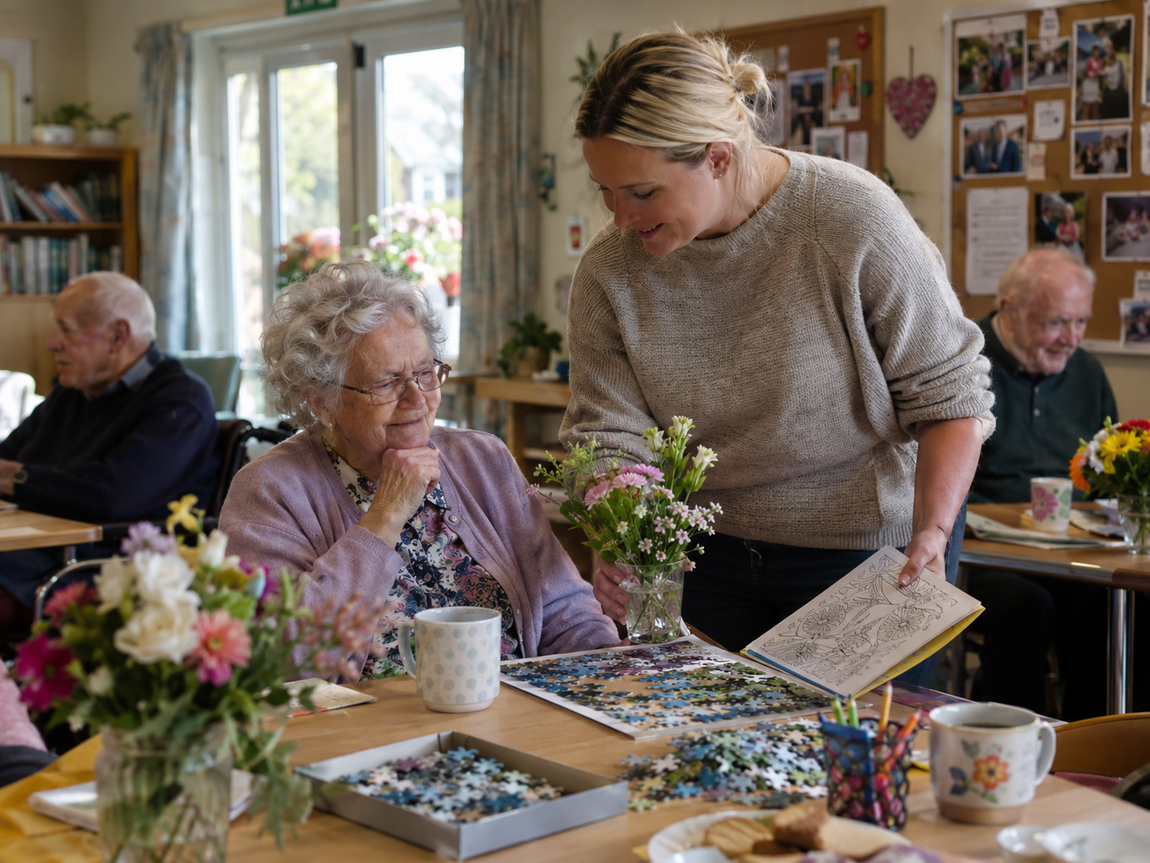
Whether somebody is spending time with one of our self-employed Personal Assistants at home or attending our Dementia Day Club in Hanham, support should not be about taking over somebody’s day.
It should be about getting to know the person.
- What they enjoy.
- What they avoid.
- What makes them laugh.
- How they communicate.
- What helps them feel comfortable.
- What matters to them.
And how we can support them to remain involved in the everyday decisions that affect their life.
Sometimes person-centred support isn't a grand gesture.
Sometimes it is simply changing:
“What do you want to do?”
into:
“Would you like to sit here with a cuppa, or shall we have a look at what everyone else is doing?”
That small change can give somebody a much easier way to say:
“This is what I want.”
Looking for Support for Someone You Care About?
If everyday decisions are becoming harder for Mum, Dad or somebody else you care about, the right support should help them stay involved in their life, not simply take over.
Your Care provides home support across Bristol, South Gloucestershire and BANES, alongside our Dementia Day Club in Hanham.
Not sure what kind of support would suit them?
You don't need to have everything worked out before you contact us.
We can talk through what's happening now, what matters to the person you care about and what kind of support might help.
📞 Call 0117 947 7422
🌐 Find out more about Your Care and our Dementia Day Club on our website.
Thoughtful care, from our family to yours.