



posted 24th February 2026
When families first enquire about home care, the question often sounds like this:
“Do we need care seven days a week?”
What they’re really asking is:
Are we doing enough?
Why Families Jump Straight to Daily Care
When someone you love starts forgetting medication, wearing the same clothes repeatedly, or leaving food untouched in the fridge, it feels urgent.
If you’re juggling work, children, or you don’t live close by, daily support feels like the safest option.
Seven days feels responsible. Protective.
But reassurance and risk are not always the same thing.
Why Older People Resist Daily Care
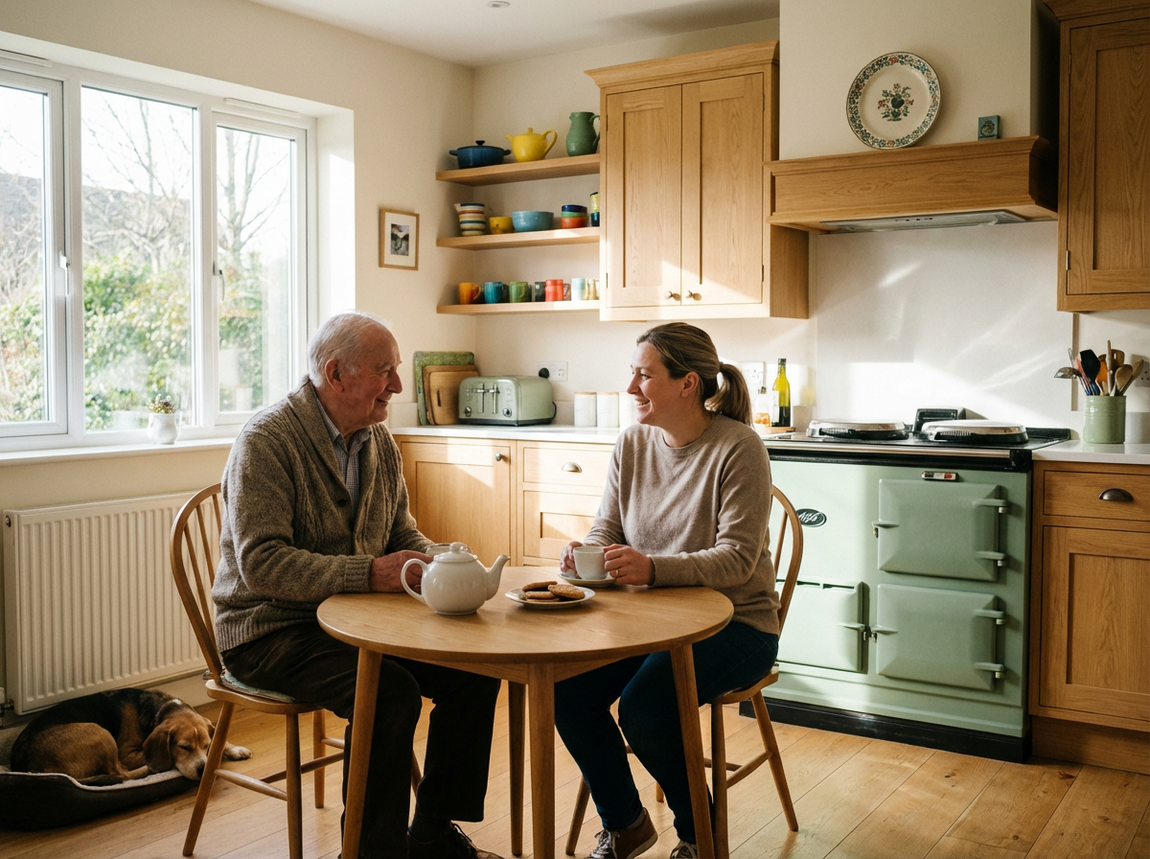
On the other side is usually someone saying, “I’m fine.”
They resist daily support because:
- Independence matters deeply
- They don’t want to feel monitored
- They worry about cost
- They don’t see the risks the same way you do
Starting with seven days a week can feel overwhelming. And when something feels overwhelming, people push back.
What Actually Works Better
In many cases, starting small works far better.
Not because the situation isn’t important. But because gradual support builds trust.
Instead of asking “How many days?”, it can help to ask:
What is the biggest current risk?
Is it medication?
Is it nutrition?
Is it loneliness?
Is it home safety?
Start there.
What “Starting Small” Can Look Like
For many families exploring elderly care at home across Bristol and South Gloucestershire, starting small might mean:
Two one-hour visits per week
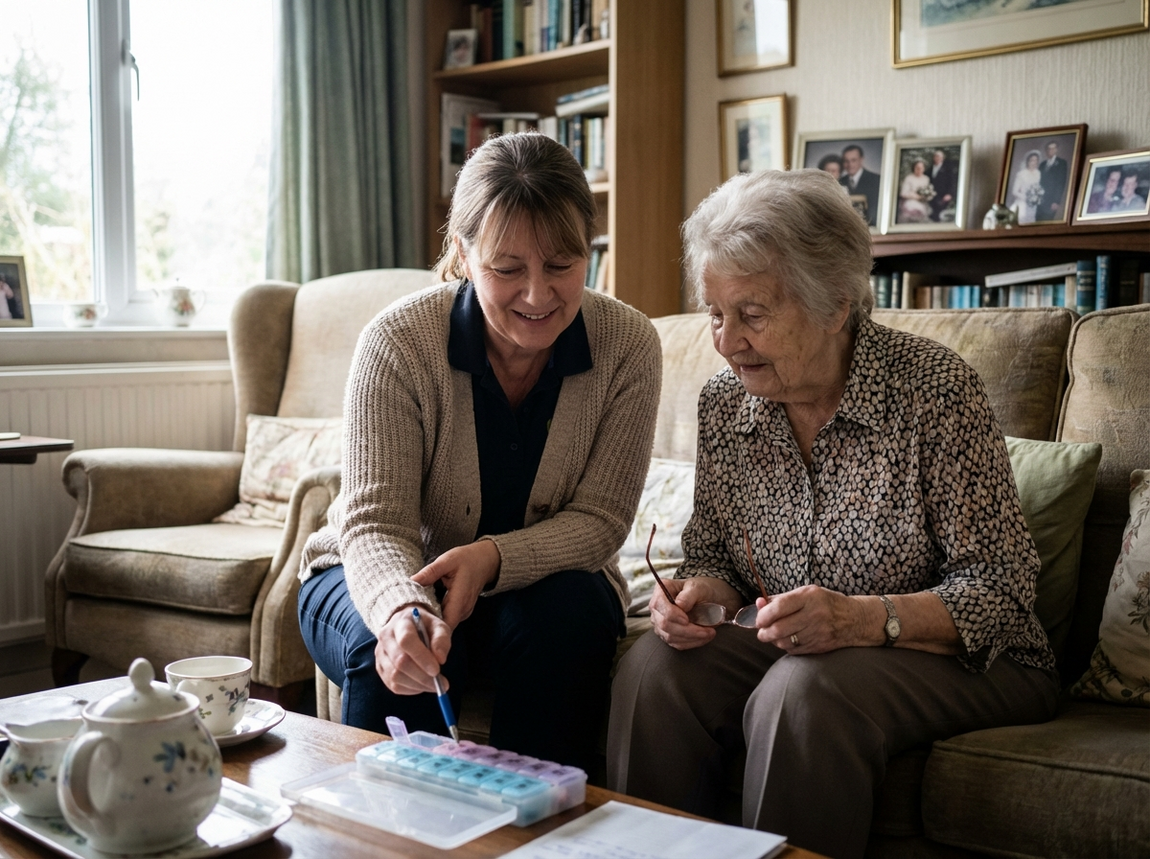
Someone checks the fridge, ensures medication routines are being followed, notices subtle changes, and provides proper conversation.
A structured medication visit
This isn’t simply handing tablets over. It includes checking blister packs, confirming doses have been taken correctly since the previous visit, identifying missed tablets early, and communicating concerns to family. That oversight reduces the risk of repeated missed doses.
Practical help only
Light cleaning, laundry or organising the home. Sometimes reducing environmental risk is the most appropriate first step.
How Support Grows Naturally
When care starts gently:
Trust builds.
Resistance lowers.
Small changes are spotted earlier.
Two visits can become three.
A weekly medication visit can increase if needed.
Support evolves with the situation instead of overwhelming it from the beginning.
And it can always be adjusted. Increased. Reduced. Reviewed.

So… Do You Need Seven Days?
Sometimes, yes.
But many families don’t need to begin there.
If you’re considering private home care, live in the Bristol, South Glos and BANES area, and aren’t sure where to start, the best first step is usually a conversation, not a commitment to daily support.
Or call us on 0117 947 7422 and we’ll talk it through properly.
Thoughtful care, from our family to yours.