

posted 14th October 2026
My Elderly Parent Isn't Eating Properly: What Can I Do?
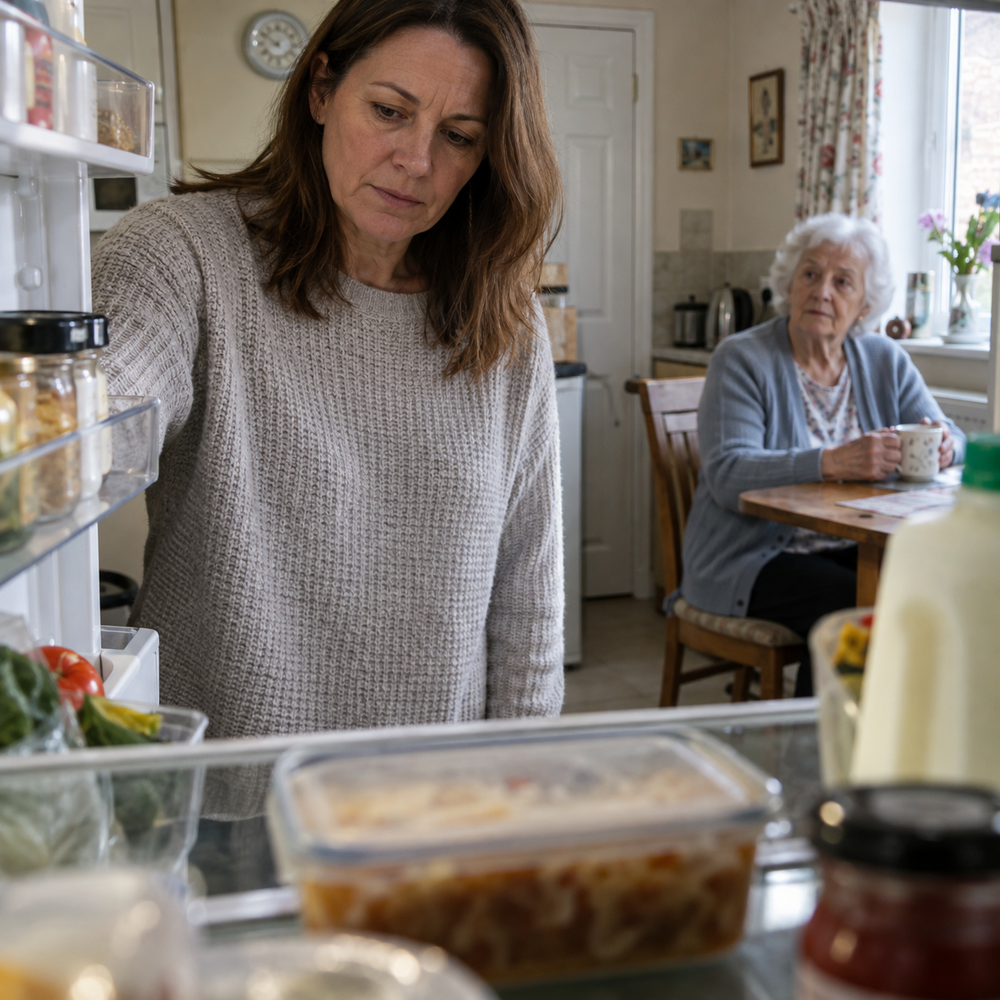
You make Mum a shepherd’s pie on Sunday.
On Wednesday, it's still sitting untouched in the fridge.
Yet every time you ask whether she's eaten, she says:
“Of course I have.”
That can leave you wondering what is actually going on.
Is Mum simply eating less than she used to? Is cooking becoming too much effort? Has she forgotten the meal is there? Or is the change in appetite something you should speak to her GP about?
When an older parent stops eating properly, the first step is to work out what has changed and why.
Signs Mum or Dad may not be eating properly
One missed meal doesn't necessarily mean there's a problem.
What matters more is whether you're starting to notice a pattern.
You might see:
- meals left untouched
- food regularly going out of date
- very little food in the house
- toast, biscuits or cereal replacing proper meals
- Mum saying she's eaten but not remembering what she had
- favourite foods being ignored
- clothes becoming looser
- cooking stopping altogether
- drinks being made but left untouched
These changes often happen gradually, which is why they can be easy to miss.
Why does Mum say she's eaten when she hasn't?
There can be several reasons.
Someone living with dementia may genuinely believe they have eaten because they can't remember whether a meal took place.
Other people may not want their family to worry, or may feel embarrassed that shopping or cooking has become harder.
Rather than repeatedly asking whether Mum has eaten, look at what is actually happening.
Has food disappeared from the fridge?
Are prepared meals being opened?
Is there enough food in the house to make a proper meal?
Those practical clues can often tell you more.
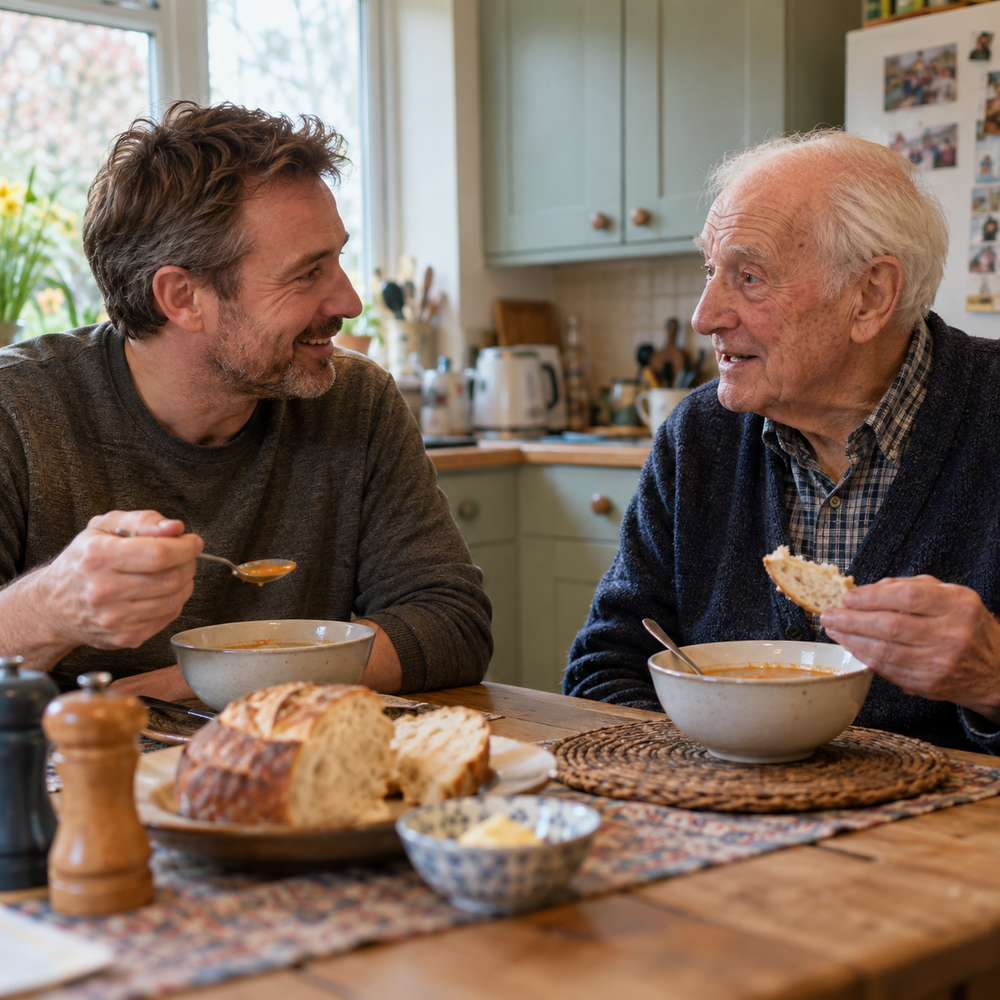
Is it appetite, or has preparing food become harder?
They aren't necessarily the same thing.
If Mum happily eats when somebody puts a meal in front of her, the problem may not be appetite.
The difficulty could be everything that comes before it.
Shopping, carrying bags, preparing ingredients, using the cooker, timing the meal and clearing everything away can all become more tiring with age.
When that happens, toast or cereal can start to feel much easier.
Could eating alone be part of the problem?
Sometimes, yes.
Someone who spent years eating with a partner or family may find meals much less appealing when they're alone.
You may notice Mum eats better when she comes to your house, goes out for lunch or has someone sitting with her.
In those situations, the food may only be part of the issue.
Company can make a real difference at mealtimes.
Don't forget about drinks
Families often focus on food and overlook hydration.
Some older people forget to drink, don't recognise thirst as easily or simply need regular prompts.
You may notice:
- cups of tea left untouched
- bottles of water remaining unopened
- a dry mouth
- darker urine
- dizziness
- unusual tiredness
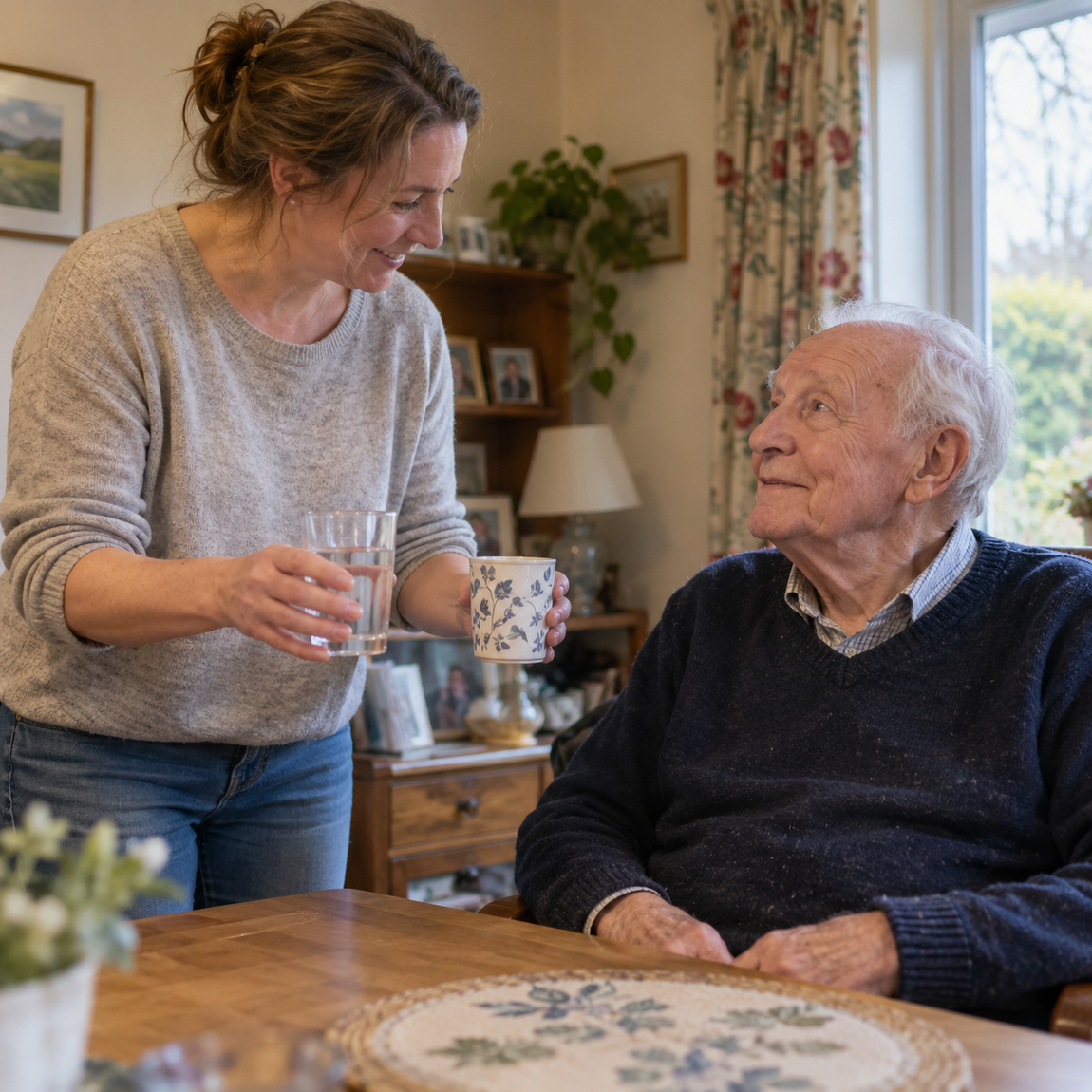
Offering drinks regularly can work better than simply leaving one nearby.
Can dementia affect eating?
Yes.
Dementia can affect eating and drinking in several ways.
A person may:
- forget they haven't eaten
- struggle to recognise food
- lose interest in meals
- develop different food preferences
- become distracted while eating
- find cooking and meal planning harder
- have difficulty using cutlery
This is why it's important not to assume someone is simply being fussy or stubborn.
Something that once felt straightforward may genuinely have become difficult.
When should I speak to the GP?
A persistent change in eating shouldn't automatically be put down to ageing.
It's worth speaking to the GP if you are concerned about:
- unexplained weight loss
- ongoing loss of appetite
- regularly refusing food
- pain when eating
- problems chewing
- coughing or choking when eating or drinking
- difficulty swallowing
- signs of dehydration
- any sudden change in health or behaviour
There can also be medical reasons for eating less, including dental problems, poorly fitting dentures, pain, constipation, illness, low mood and medication side effects.
If somebody's suddenly very unwell, severely dehydrated or unable to swallow safely, seek urgent medical advice.
What practical things can families try?
The right support depends on what is causing the difficulty.
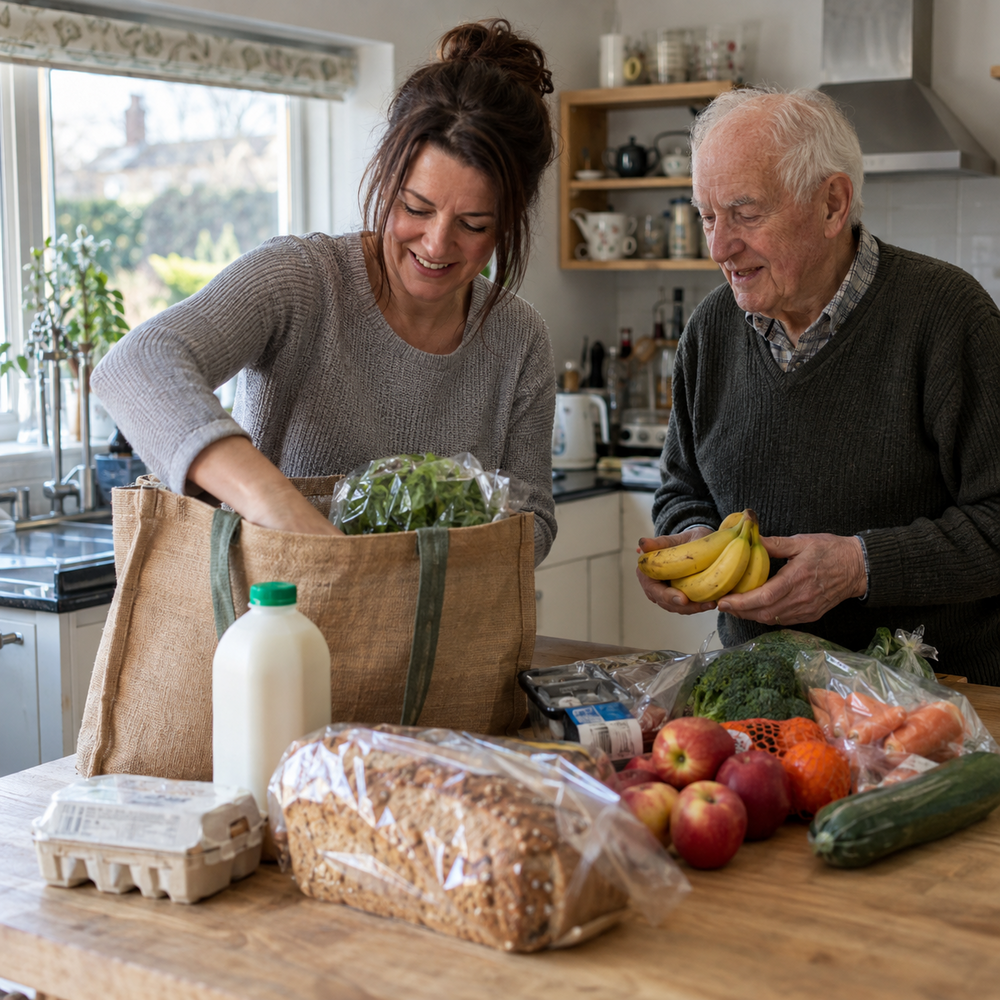
If shopping is becoming hard, you could arrange an online shop or ask someone to pick up essentials.
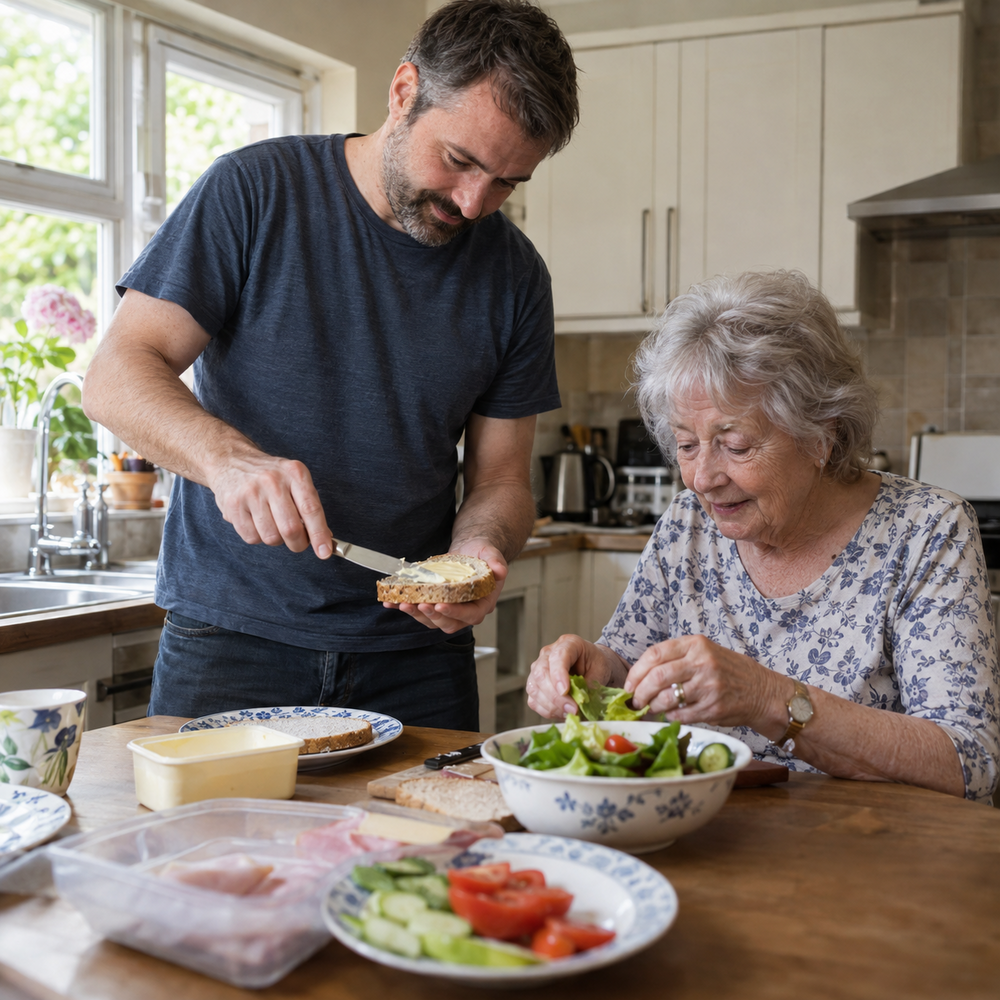
If cooking is the problem, prepared meals or help making lunch may be enough.
If remembering is the issue, a regular lunchtime routine or visit can help.
And if eating alone seems to be the problem, company at mealtimes may make a bigger difference than changing the food itself.
Sometimes the answer is not more care.
It's the right help at the right time of day.
Mum doesn't need care. She just needs help with lunch.
That may be exactly right.
Some older people are still managing most of their day independently but would benefit from someone coming in to:
- pick up shopping
- prepare something they enjoy
- make a drink
- check what's running low
- sit with them while they eat
- spend some time talking
The aim isn't to take over.
It's to make the parts of everyday life that have become harder feel manageable again.
How Your Care can help
Our Personal Assistants support older people across Bristol, South Gloucestershire and BANES with everyday tasks that help them continue living independently at home.
That can include shopping, meal preparation, making drinks, company at mealtimes and regular wellbeing visits.
Visits start from one hour, and we aim to introduce families to consistent Personal Assistants so Mum or Dad can get to know the person coming into their home.
For one family, that may mean a regular lunchtime visit.
For another, it could be help with shopping once or twice a week.
The support can be shaped around what's actually becoming difficult.
If you've started noticing that Mum or Dad isn't eating properly, you don't have to wait until things reach crisis point before asking what might help.
Call Your Care on 0117 947 7422 or contact us here to talk through what you have noticed.
Thoughtful care, from our family to yours.