

posted 28th November 2025
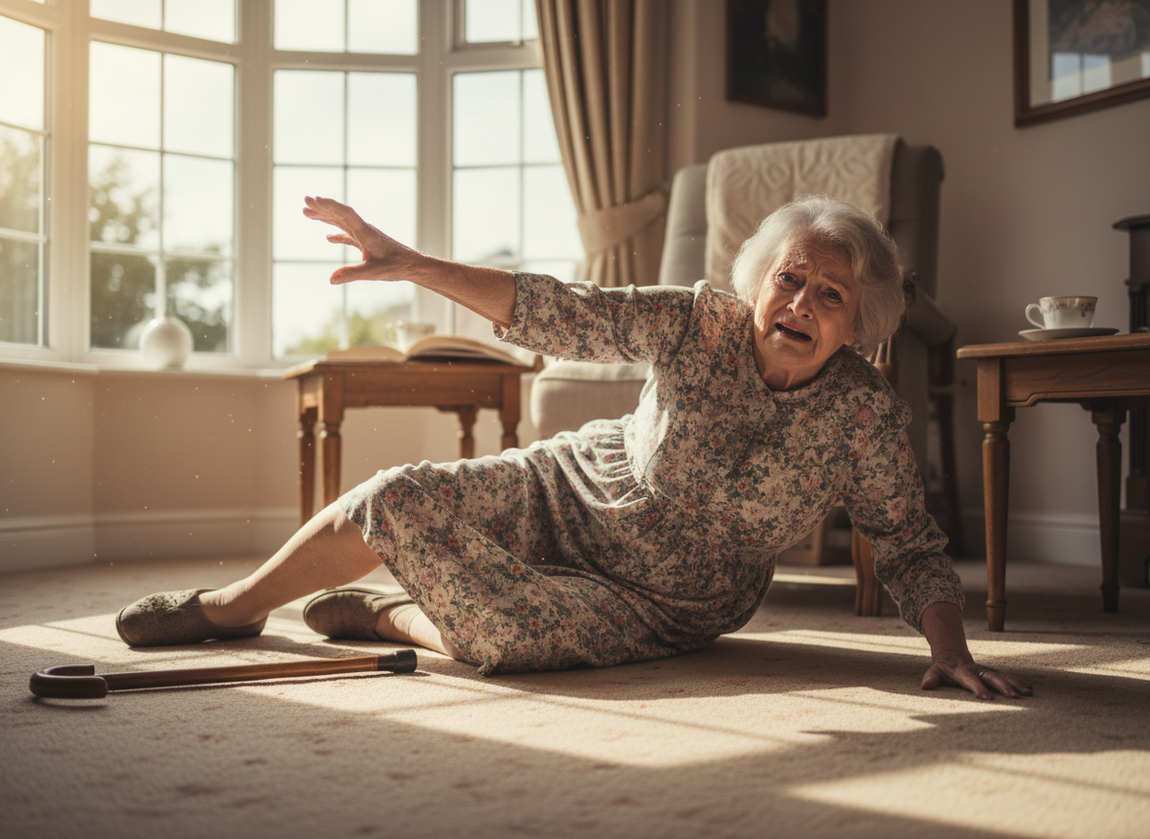
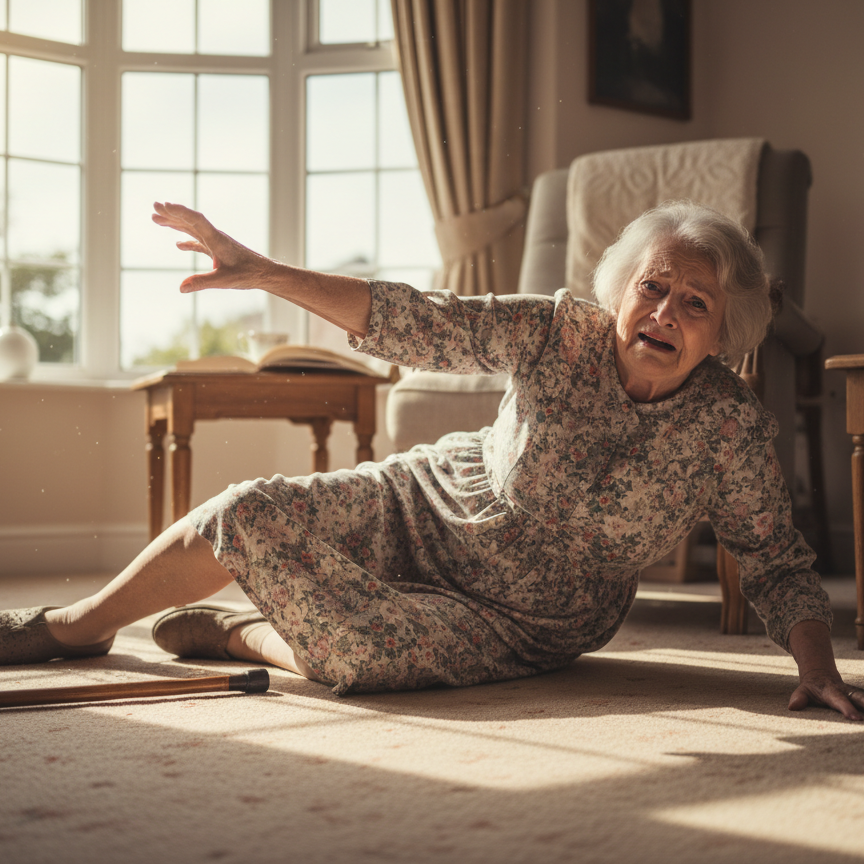
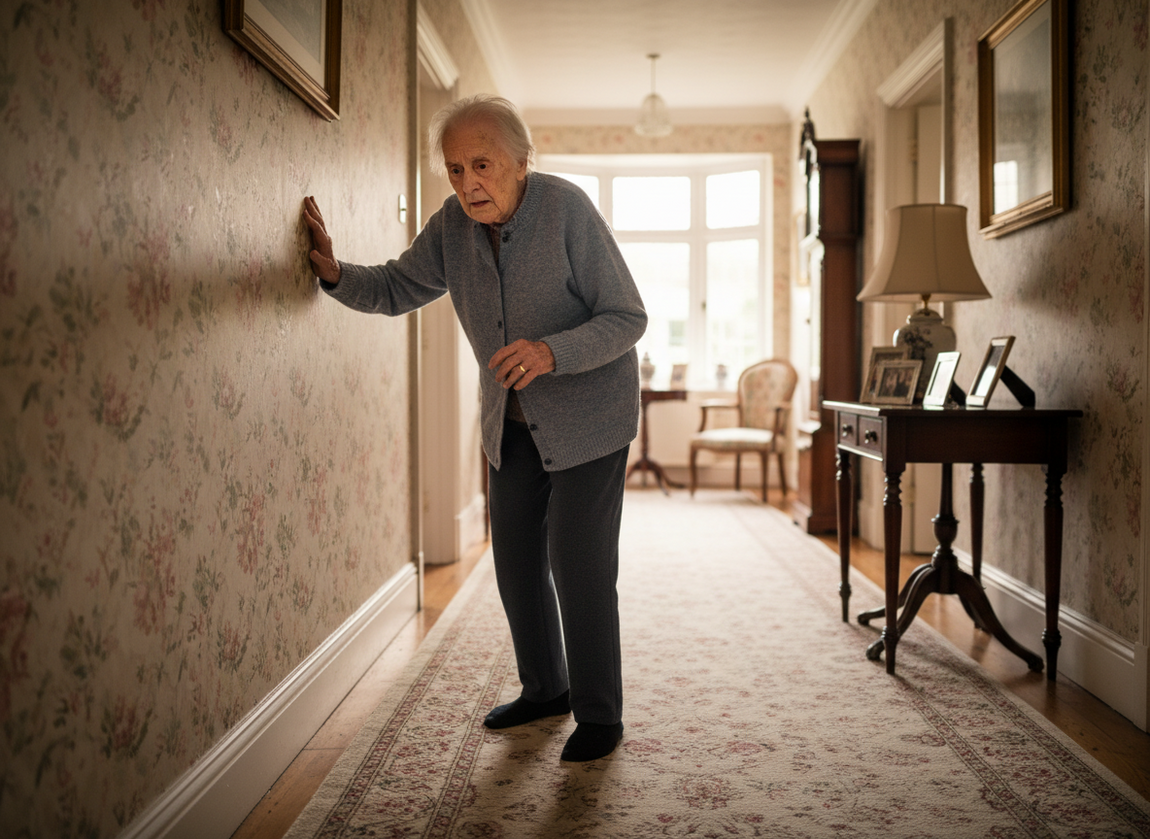
If your mum or dad has had a fall, you’ll know that awful moment when the phone rings and your stomach drops. Even if they weren’t badly hurt, something shifts afterwards. They start moving more cautiously. They hold onto walls or furniture. They avoid stairs. And slowly, the confidence they once had begins to fade. One daughter recently told us, “Dad’s scared to move now.” Another said, “Mum won’t even walk to the kitchen unless she’s gripping everything around her.” It’s heartbreaking, because you can see exactly what’s happening and you know that staying still will only make things worse.
Why That First Fall Matters More Than Families Realise
Here’s the part most families don’t hear soon enough: the fall itself isn’t the real danger, it’s the fear that comes afterwards. Fear changes everything. People move less, their muscles weaken, their balance drops, and the risk of another fall doubles.
In the UK, the statistics are stark. One in three people over 65 will fall each year, and one in two people over 80 will fall. More than 220,000 emergency hospital admissions happen every year because of falls, and 95% of hip fractures are caused by a fall. Once someone has fallen once, they are two to three times more likely to fall again.
What most families don’t realise is that it’s not usually the injury that changes everything, it’s the loss of confidence. After a fall, people begin to shuffle, grip the furniture, avoid certain rooms and gradually stop going outside altogether. Their world becomes smaller, not because they want it to, but because movement begins to feel unsafe. This cycle is powerful, but it is not inevitable.
The Walking Aid Nobody Wants… Until They Do
We see this all the time. A physiotherapist recommends a walking stick or a wheeled walker. It arrives. And then it sits in the corner unused. “Mum says she doesn’t need it.” “Dad thinks it makes him look old.” No one wants to feel like they’re “giving in”.
But here’s the truth: walking aids don’t take independence away, they protect it. A wheeled walker means someone can walk steadily and safely. A walking stick, when it’s the right tool for the right person, can prevent a fall from happening in the first place. The difficulty is that very few older people will start using a walking aid on their own. They need encouragement, reassurance and patience, the kind that comes from someone who understands the psychology behind falls and confidence loss.
Why Regular, Consistent Support Makes All the Difference
A carer doesn’t just “visit”. The right carer helps rebuild confidence step by step. They walk with your loved one, encourage gentle movement, support the correct use of a walking aid and keep an eye on hazards like loose rugs, trailing cables and worn carpets. They also notice the small changes, the slight wobble, the hesitancy, the extra time taken to stand up – long before a family member might.
At Your Care, the same carer visits at the same times every week. That continuity is crucial. It means they truly understand how your mum normally moves, what your dad’s typical gait looks like and the difference between a slightly tired day and a worrying decline. Larger agencies often can’t offer this consistency, but it’s exactly what prevents falls.
Regular movement, gentle exercise and steady encouragement make an enormous difference. Confidence comes back one small walk to the bathroom, the kitchen, or the garden at a time.
Real Stories: When Confidence Comes Back
Peter’s Story – “I Thought I Was Done”
Peter was 82 when he fell in his hallway. He wasn’t badly hurt, but the fear took over. His GP had arranged a wheeled walker for him, but like so many people, he couldn’t face using it. His daughter later found it pushed into the cupboard, out of sight, as if hiding it meant he didn’t need it. Soon after, he stopped going upstairs, stopped going to the shop and stopped moving much at all. “He’s just given up,” his daughter told us.
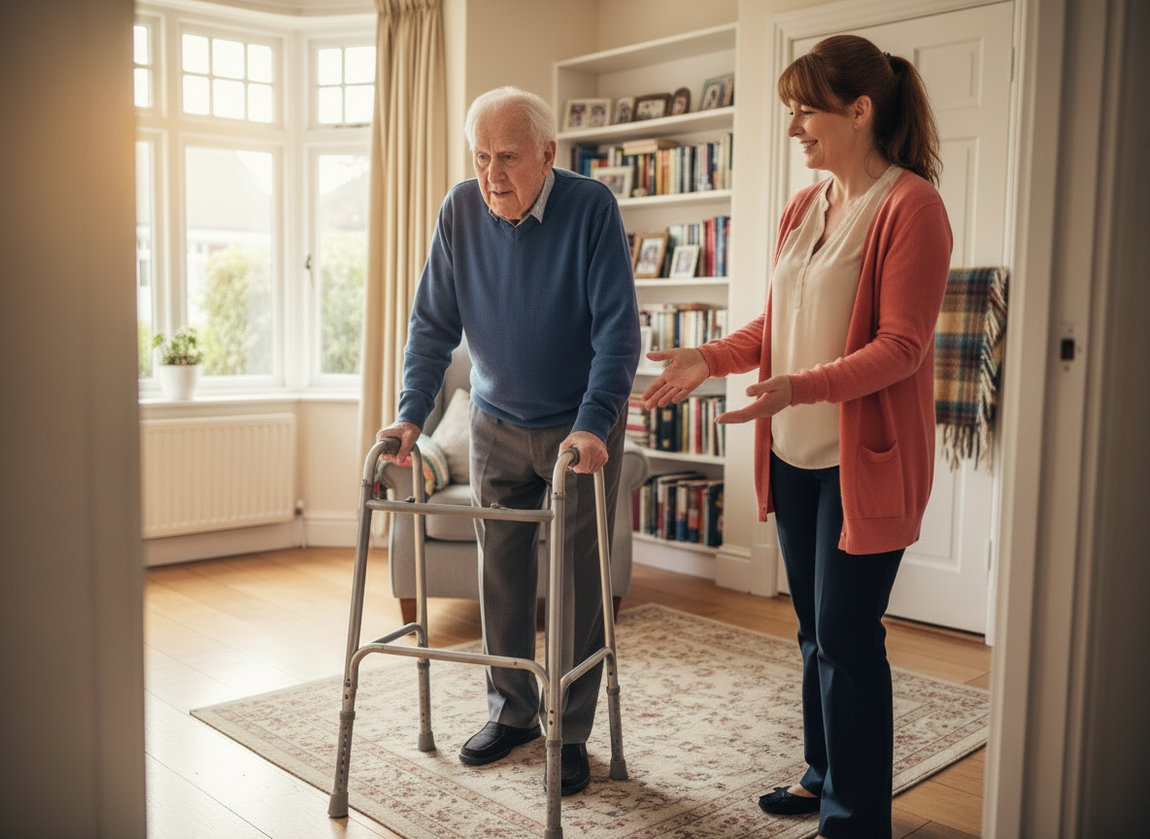
We began visiting three times a week. At first, he resisted even standing up. But Julie, his carer, gently encouraged small walks with the wheeled walker - to the kitchen, then to the front door, then gradually down the path. Week by week, his confidence returned. One day he said, “I thought I was done. But Julie wouldn’t let me give up.” Now, he walks to the shop again, wheeled walker and all, and it hasn’t gone back in the cupboard since.
Frank’s Story – The Walking Stick He Swore He Didn’t Need
Frank had always been active. After a fall in his garden, his GP recommended a walking stick, but he refused to use it. “I’m not old enough for that,” he said, at 87. His son tried everything to convince him, but nothing worked. Frank continued shuffling around gripping furniture and pretending he was “fine”, even as the risk increased.
When Maria, his carer, visited, she didn’t force the issue. She simply walked beside him, keeping him steady. She carried the stick herself. After a few days, she suggested gently, “Try this for a moment, just to take the weight off.” Surprisingly, he accepted it. From there, he began using it daily. His steps became longer, steadier and more confident. His son later said, “He just walked to the shed with his stick, I haven’t seen him look that confident in years.” Frank hasn’t fallen since.
A Couple’s Story – When One Person’s Choice Affects Both
One couple we supported faced a different challenge. The wife had been given a wheeled walker, and she walked brilliantly with it, steady, safe and confident. But her husband found the walker too heavy to lift in and out of the car, so he insisted she use a walking stick instead. Unfortunately, she wasn’t safe with a stick. She leaned heavily on him for balance, and they both ended up falling more than once. His mobility began to decline because of the strain and the falls he was experiencing too.
When Your Care support was put in place, the carer gently but firmly explained that the wheeled walker was the safest option. Once she used it, everything changed. She walked comfortably and confidently, without relying on anyone else for balance. She didn’t resist it at all, he had been the one resisting it, because of the inconvenience. What he hadn’t realised was that his decision had put both of them at risk. Sometimes the safest option isn’t the easiest, but it’s the one that protects everyone’s independence.
The Top 5 Mistakes Families Make With Walking Aids
Families always mean well, but we often see the same unintentional mistakes that increase the risk of falls.
1. Choosing convenience over safety – using a stick instead of the recommended wheeled walker because it’s easier to manage.
2. Buying the wrong aid online without a proper assessment.
3. Letting the walking aid sit unused in the corner due to fear, pride or embarrassment.
4. Not understanding how much confidence drops after a fall, leading to less movement and higher risk.
5. Assuming someone will “be fine”, rather than getting early support.
These patterns are common, and preventable.
How We Help Your Loved One Stay Safe, Steady and Independent
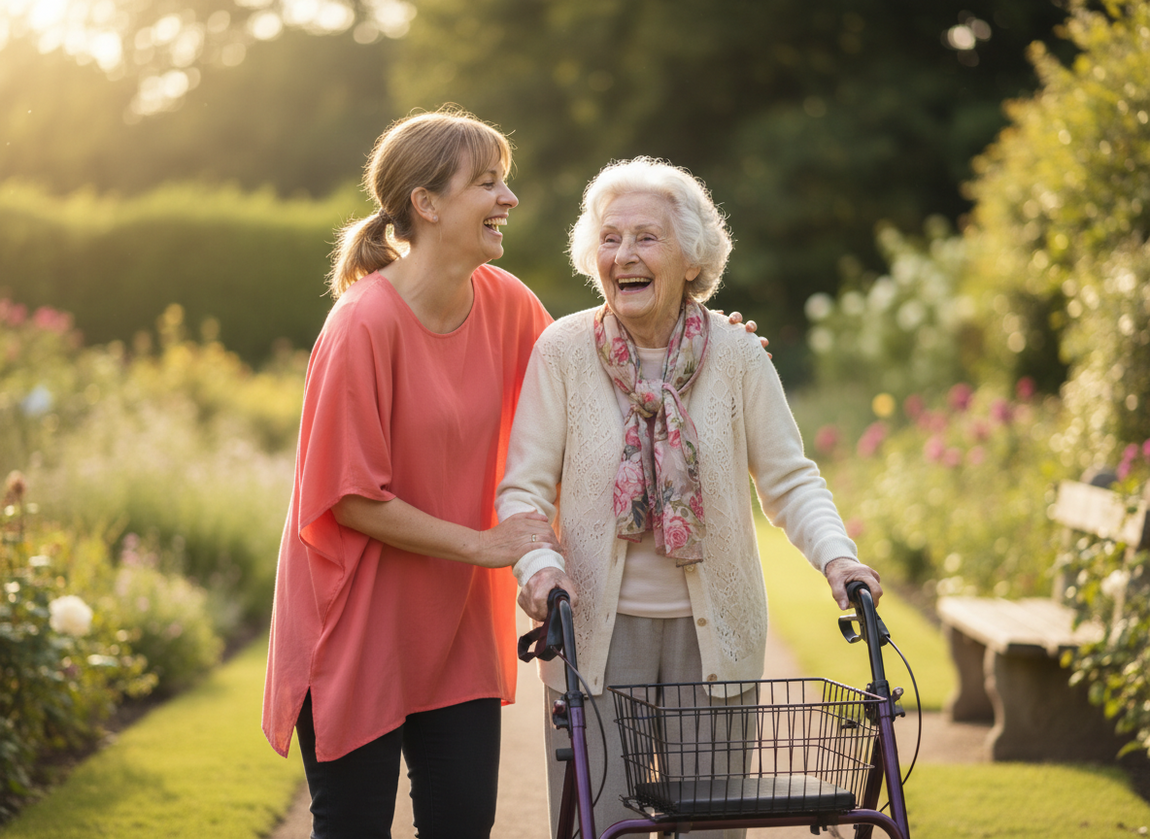
At Your Care, our focus is simple: keep people moving, keep people safe and keep people independent. Our carers provide gentle encouragement, support with mobility, safe use of walking aids, and regular observation to spot early signs of decline. They provide companionship, reassurance and structure – the small things that make the biggest difference.
If your mum or dad has had a fall, or you’re starting to worry one might happen, we’re here to help.
Call us on 0117 9477422 to discuss home care support, or contact us here to learn more about our care services.
Your loved one doesn’t have to shrink into their chair. With the right support, they can stay steady, safe and independent in the home they love.