




posted 22nd April 2026
When you are caring for a parent, the hardest part of mealtimes is not always the cooking.
It is the quiet worry in the background. The frustration when a favourite meal is pushed away. The question of whether they are getting enough of the right nutrients. The feeling that every plate is a small step in trying to protect their health.
Across Bristol and South Gloucestershire, many families tell us the same thing.
Food is never just fuel.
At Your Care, we see it as one of the most gentle and powerful ways to support brain health, while also holding onto routine, comfort, and connection.
You may have heard of the MIND Diet. It is not restrictive or complicated. It is a simple, research-led way of eating that focuses on foods known to support memory and cognitive health.
For families living with dementia, it can offer something really important. A sense of doing something positive, in a situation that can often feel uncertain.
The Power of the Plate
The worry with any new way of eating is that it will feel like another task on an already full day.
But the MIND Diet works because it is built on small, realistic changes. The kind that fit naturally into everyday life.
• Leafy Greens and Berries
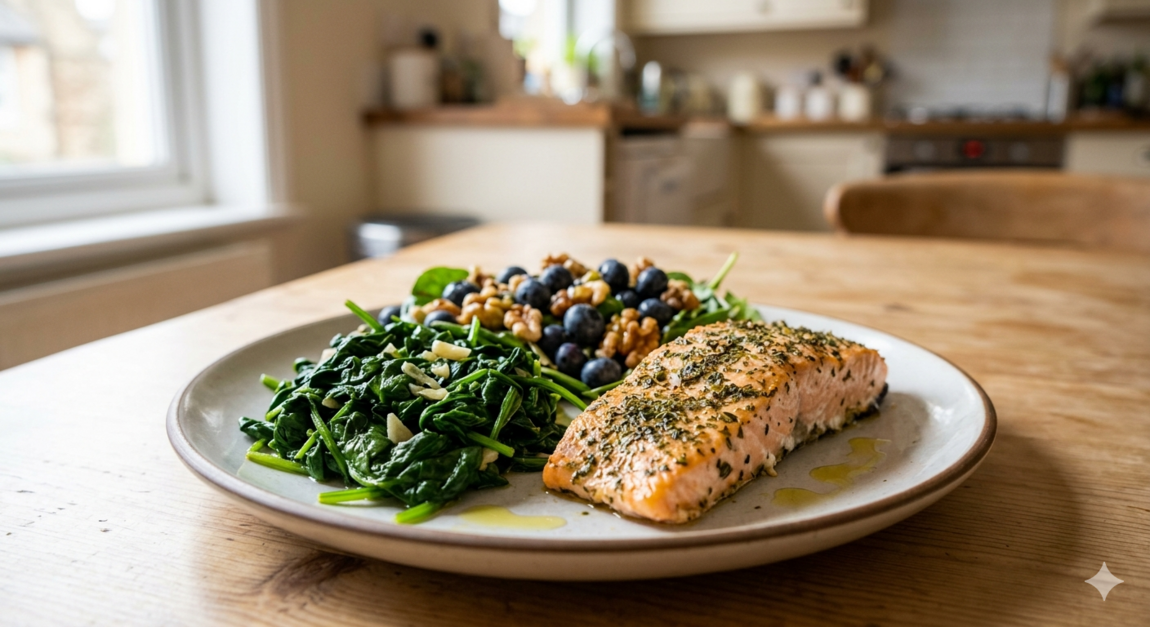
These are some of the most supportive foods for brain health. A handful of blueberries with breakfast or spinach added into a familiar meal can help protect brain cells over time
• Healthy Fats
Simple swaps like using olive oil instead of butter, or adding walnuts or oily fish, can support long-term cognitive function
• Whole Grains and Beans
These provide steady energy, helping to avoid dips that can sometimes increase confusion or irritability
Small Steps, Big Impact
For many people, mealtimes are one of the most important parts of the day.
Not just for nutrition, but for routine and connection.
We often suggest not trying to change everything at once.
• The One Change Approach
Add one supportive ingredient to a meal they already enjoy. Seeds on porridge. Extra vegetables with a roast. Keep it familiar
• Make it Social
Eating together matters. Conversation, even quiet companionship, can help encourage appetite and reduce anxiety
• Hydration Matters
Low fluid intake can sometimes look like confusion. Keeping drinks nearby, whether water, tea, or something familiar, is a simple but important step

When Mealtimes Feel Different
Preparing meals in this stage of life can feel emotional.
There is always that layer of thinking ahead. Will they eat it. Can they manage it. Will today be easier or harder than yesterday.
You are not just cooking. You are adapting, watching, encouraging, and caring all at once.
The families who often feel more balanced are the ones who allow themselves support.
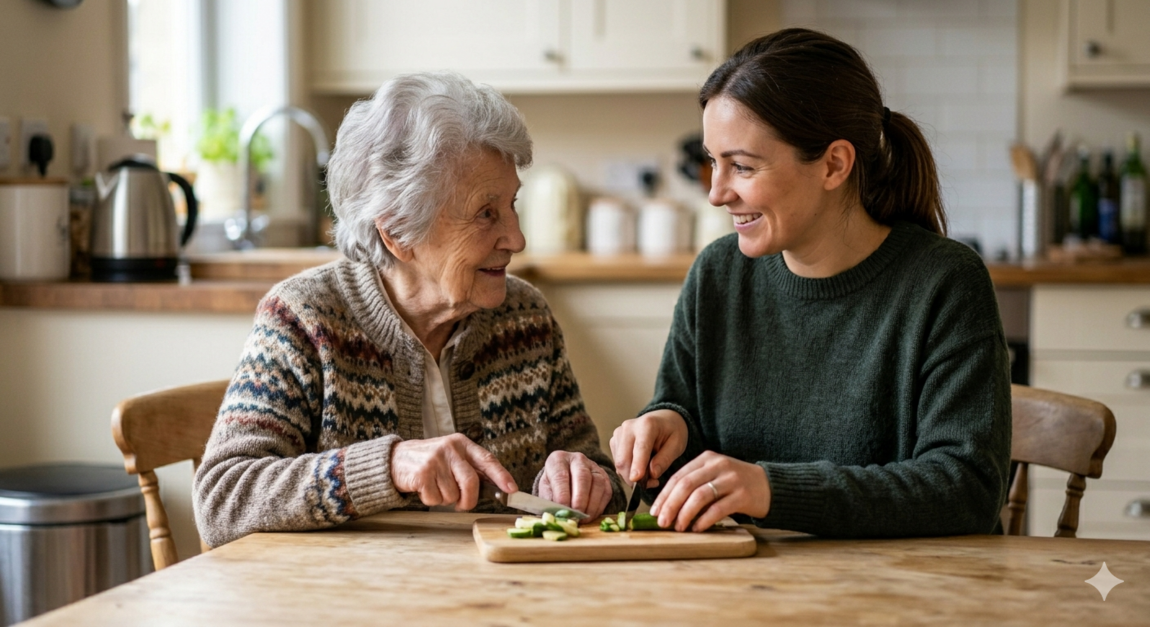
A Personal Assistant can help with preparing meals, but also with creating a calm, unhurried environment around food. Sitting together. Offering gentle encouragement. Taking away the sense of pressure.
It allows you to step out of the kitchen role and back into simply sharing time together.
We’re Here to Help
If mealtimes are starting to feel more stressful than enjoyable, you are not alone.
Many families across Bristol and South Gloucestershire come to us feeling exactly the same way.
Sometimes, it only takes a conversation to see how a little extra support can make things feel lighter again.
If you would like to talk through how we can support your family with meal preparation and companionship:
Call us on 0117 947 7422 or click here to request a call back.