



posted 21st October 2026
My Parent With Dementia Keeps Calling Me: What Can Help?
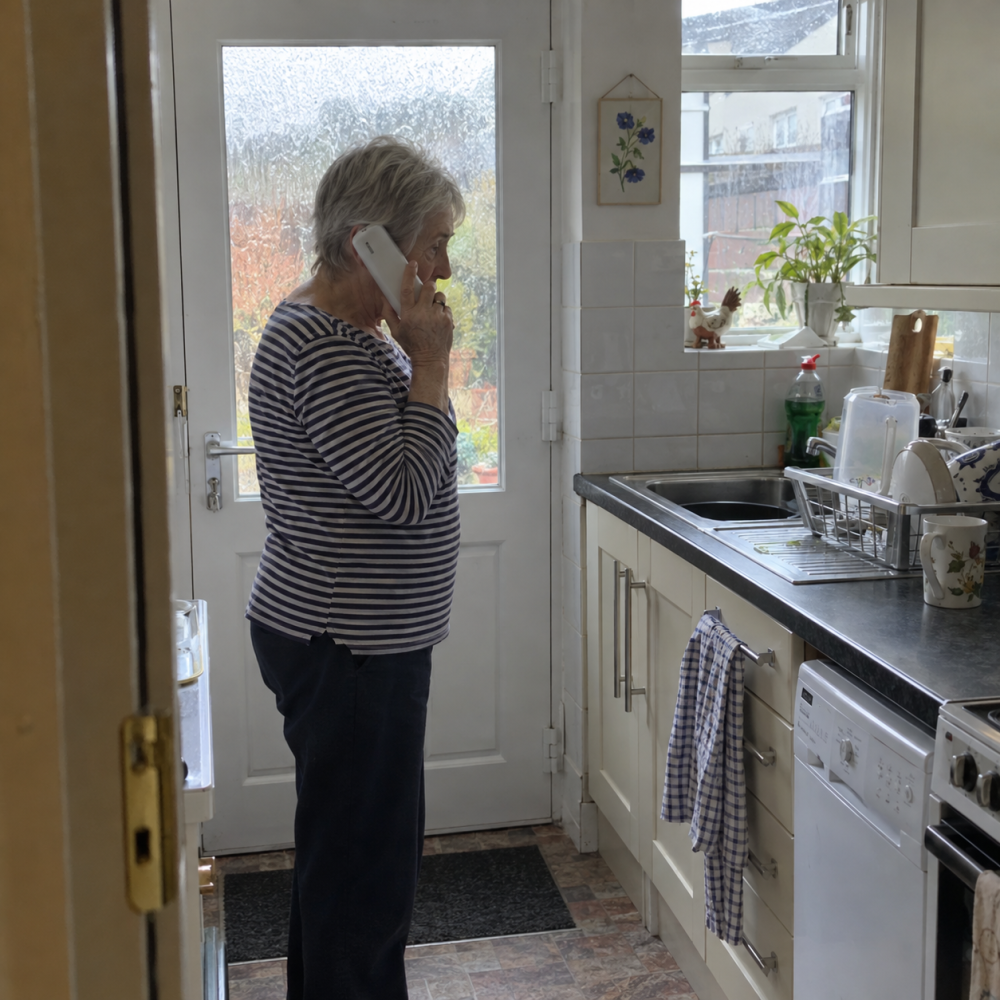
You've just spoken to Dad. You answered his question, told him when you would be visiting and said goodbye.
Ten minutes later, your phone rings again.
“Are you coming today?”
By lunchtime, you've had the same conversation several times. You want to reassure him, but you also have work, children or other things that need your attention.
Then comes the guilt. You feel frustrated with the calls, and worried about what might happen if you miss one.
If your parent with dementia keeps calling, it can help to look at what they need in that moment, alongside finding a way to make the day manageable for you both.
Why might someone with dementia call repeatedly?
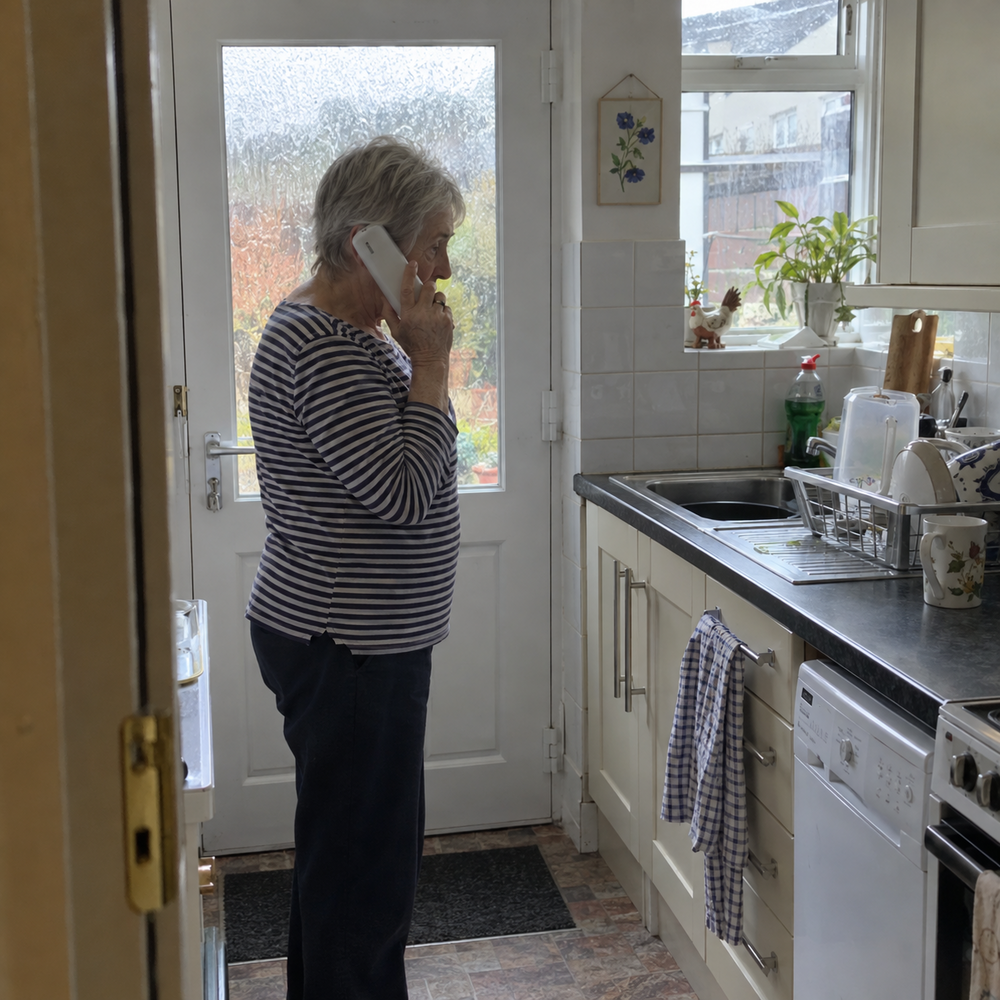
A person living with dementia may not remember making an earlier call or hearing the answer. To them, the question may still feel unanswered.
Sometimes they are seeking reassurance rather than information. Knowing that someone familiar is there can matter more than the details of the conversation.
Alzheimer’s Society explains that repetitive questions can be linked to memory difficulties and feelings such as anxiety or insecurity. Repeating an explanation may therefore only help for a short time.
The calls are worth paying attention to, but their frequency alone can't tell you what support your parent needs.
Start with how they feel
“I’ve already told you” is an understandable response when you are tired. However, your parent may have no memory of the earlier conversation.
Try a brief answer and a calm tone:
“Yes, Dad. I’m coming after lunch.”
If he sounds worried, acknowledge that too:
“It sounds as though you’re worried about when I’ll arrive. I’m coming after lunch.”
Keep promises realistic. Saying you'll be there in ten minutes when you cannot leave work may create more uncertainty later.
You don't need to explain the whole day every time. A short, familiar response may be easier to follow.

Check whether there's something they need help with
Before assuming each call is the same, listen for anything different.
- Are they asking about lunch because they can't manage to prepare it?
- Do they need help finding something?
- Are they uncomfortable, or struggling with a task they usually do independently?
Changes in behaviour can have several causes, including physical discomfort, emotional distress and difficulties with the surroundings. A phone conversation may not give you the full picture.
If you're concerned that your parent can't manage safely, arrange appropriate help rather than relying on reassurance over the phone.
Look for a pattern
For a few days, jot down when the calls happen, what your parent asks and what else is happening around that time.
For example:
- Calls before lunch may prompt you to check how meals are being managed.
- Calls after a visitor leaves may prompt a conversation about how time alone feels.
- Calls about appointments may suggest that arrangements need to be clearer.
These are starting points for a conversation, not proof of a cause. The aim is to understand the day from your parent’s perspective.
Try a reminder if it helps your parent
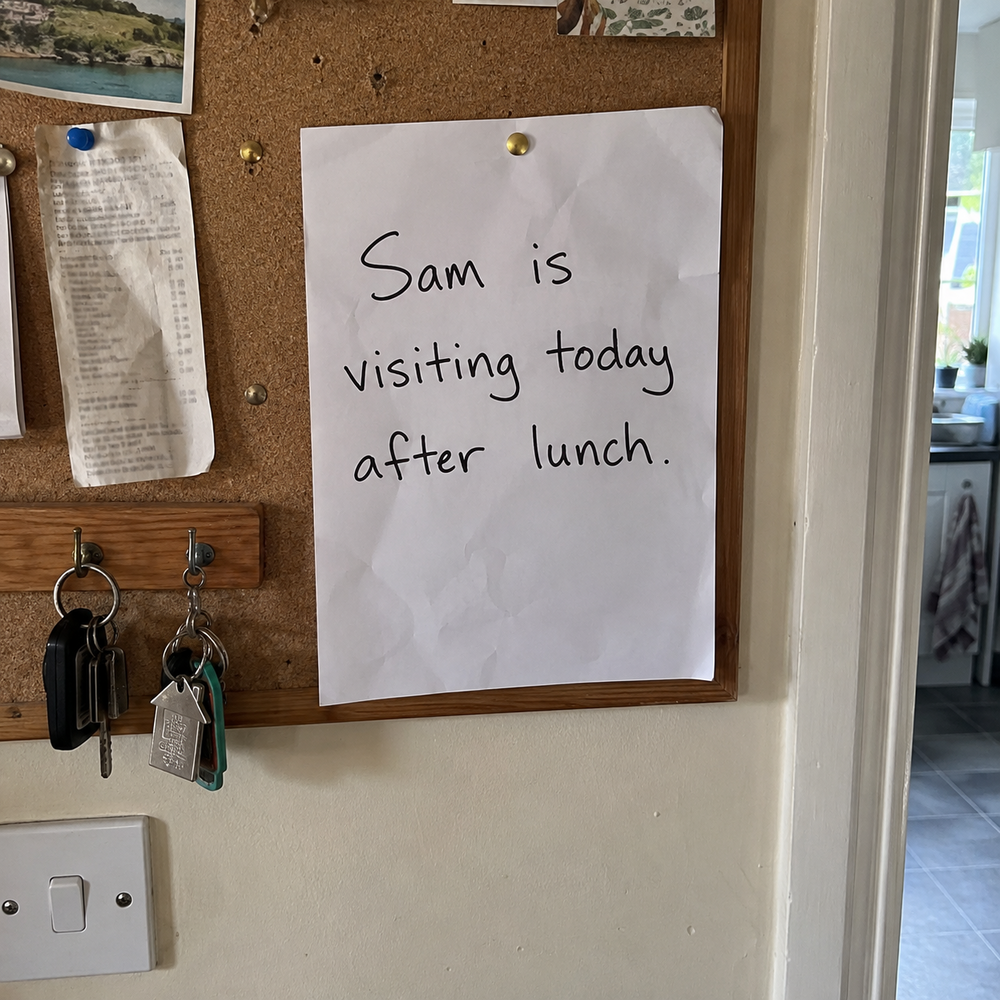
If your parent can still read and use written reminders, a clear note beside the telephone may help:
“Mollie is visiting today after lunch.”
Keep it accurate and remove it when it no longer applies. Too many notes or an out-of-date message can add confusion.
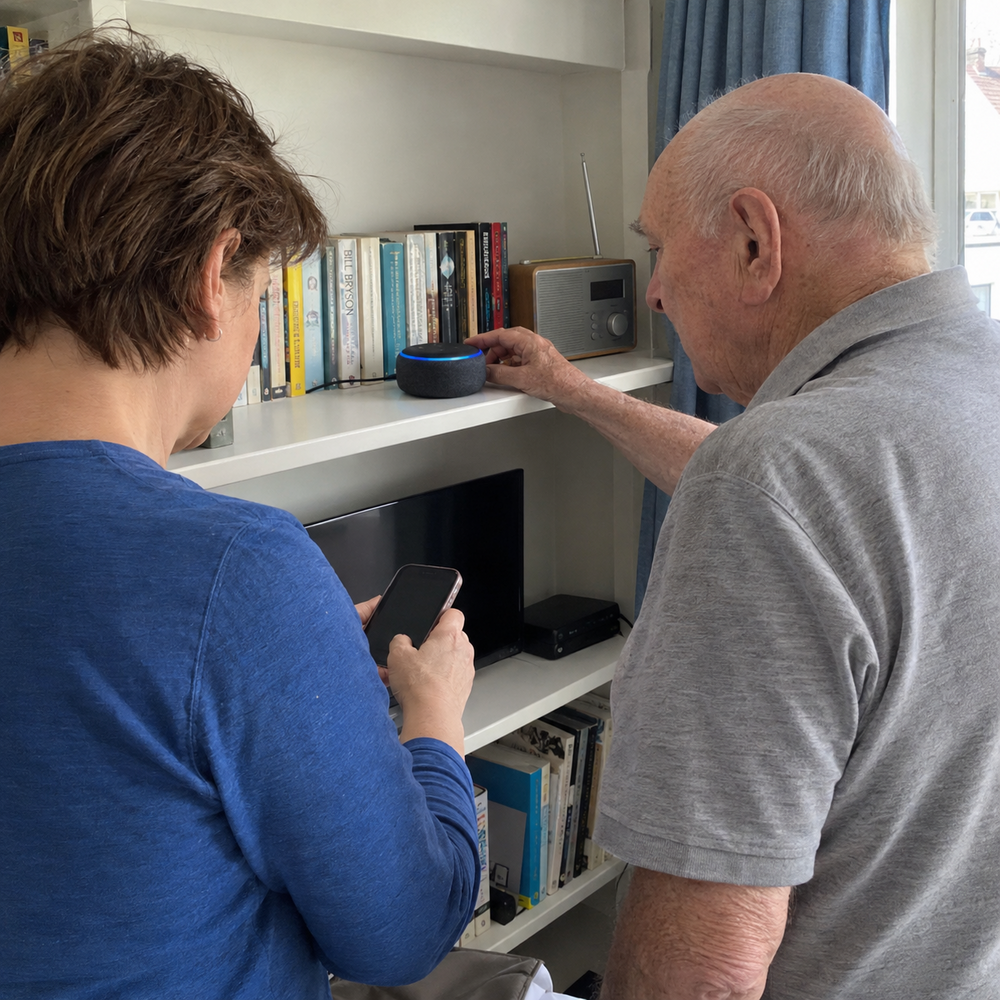
A written reminder won’t work for everyone. If your parent finds notes difficult to use, a spoken reminder through a device such as Alexa may be worth trying. You could set it to say, “Mollie is coming to visit after lunch.”
Choose an approach that feels familiar and reassuring, and stop using it if it causes confusion or upset.
Make a plan for when you can't answer
You can't always pick up while driving, working or caring for children. It helps to plan for those times with your parent, involving other trusted people where appropriate.
Consider who else could respond, whether someone nearby can check in and what help is needed during periods when your parent's alone.
Keep access to help available. Simply taking away the telephone doesn't address the reason for the calls and could leave someone unable to reach support.
If the arrangements depend on you being constantly available, that is a useful reason to review them. Your own wellbeing belongs in the conversation too.
When to seek medical advice
Repeated calls don't, on their own, establish that dementia has progressed. If there's a gradual change in memory, behaviour or day-to-day abilities, speak to your parent’s GP or dementia team.
Sudden confusion needs immediate medical attention. NHS advice is to go to A&E or call 999 if someone suddenly becomes confused. Don't assume a sudden change is simply part of their dementia.
Could more company or practical support help?
If the calls reveal long periods alone or tasks that have become difficult, it may be time to consider support during those parts of the day.
Your Care introduces self-employed Personal Assistants to families across Bristol, South Gloucestershire and Bath and North East Somerset. Depending on the agreed arrangements, support can include companionship, meal preparation, shopping, getting out and personal care.
Our Dementia Day Club in Hanham offers company, activities and support with personal care, eating and drinking during the day.
These services cannot promise to stop repeated phone calls. A conversation about your parent’s routine can help you explore whether either would meet their needs.
If your phone rarely stops ringing and you are wondering what would help, call Your Care on 0117 947 7422.
Tell us what a typical day looks like, and we can talk through the support available.
Thoughtful care, from our family to yours.