



posted 16th February 2026

Sepsis kills around 44,000 people in the UK every year. That is more than bowel, breast and prostate cancer combined.
Yet most people could not confidently tell you what sepsis is. And even fewer would recognise the warning signs quickly enough to act.
That is worrying, because sepsis is a medical emergency. It can develop in a matter of hours. The earlier it is recognised and treated, the better the outcome.
If you support someone at home – a parent, partner, neighbour or vulnerable adult – knowing what to look for could save their life.
What Is Sepsis?
Sepsis happens when the body overreacts to an infection.
Instead of fighting the infection in a controlled way, the immune system triggers a chain reaction throughout the body. This can lead to inflammation, organ failure and, if untreated, death.
It can begin with something that seems minor, such as:
• • A urinary tract infection
• • A chest infection
• • An infected cut or wound
• • Flu or pneumonia
• • A post-surgery infection
The infection itself might not seem severe. But the body’s response can escalate rapidly. That is why awareness matters.
Who Is Most at Risk?
Sepsis can affect anyone, at any age. However, risk is higher in:
• • Older adults
• • People with dementia
• • Those with weakened immune systems
• • People with long-term conditions
• • Recent hospital patients
• • Individuals with catheters or pressure sores
The Six Warning Signs. Remember SEPSIS.
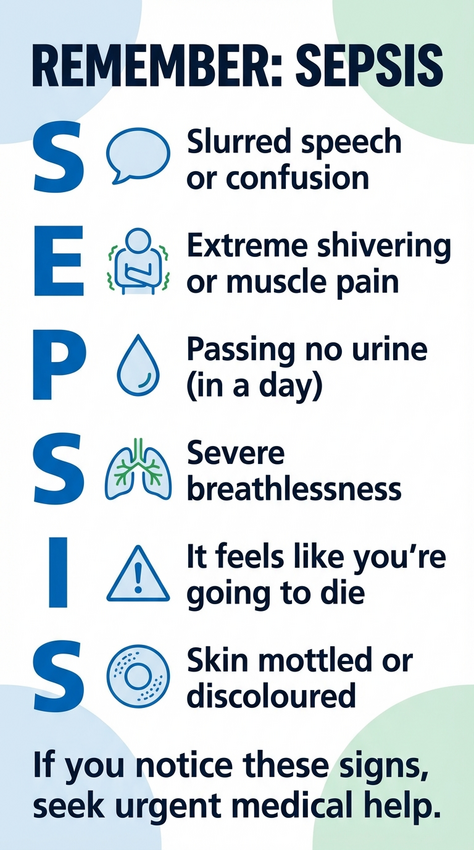
Think SEPSIS:
S – Slurred speech or confusion
E – Extreme shivering or muscle pain
P – Passing no urine in a day
S – Severe breathlessness
I – It feels like you are going to die
S – Skin mottled or discoloured
If you notice even one of these signs, call 999 immediately and say clearly: ‘Could it be sepsis?’ Do not wait for all six. One is enough.
Why Early Recognition Is So Important
Sepsis can progress quickly. At first, it may look like flu, a chest infection, a bad UTI, or someone simply not feeling right.
Families often wait to see how someone is in the morning. But with sepsis, delay can mean organs begin to fail.
Treatment in hospital usually involves IV antibiotics, IV fluids, oxygen and close monitoring. When given early, treatment can be extremely effective.
Symptoms in Young Children
If you care for children, also watch for:
• • Unusual sleepiness or difficulty waking
• • Rapid breathing
• • No urine for eight hours
• • A rash that does not fade when pressed
• • Blue or mottled skin
• • Very cold hands and feet
The Numbers That Should Concern Us All
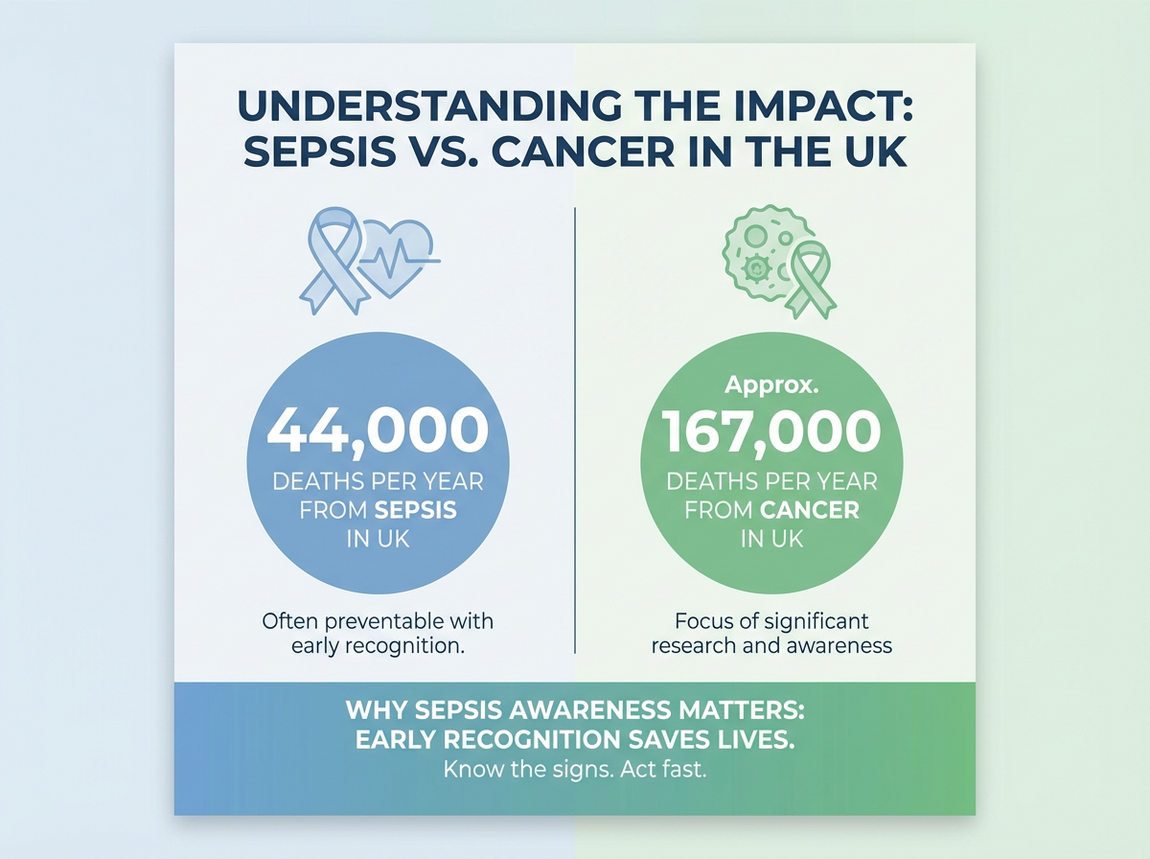
Around 44,000 people die from sepsis in the UK every year. Many experts believe thousands of those lives could be saved through earlier recognition.
Awareness is not about panic. It is about preparation. Knowing the signs means you are ready to act.
Sepsis at Home. Why Carers Matter
If someone lives alone or has cognitive impairment, they may not be able to describe how they feel. Carers are often the first to notice small but significant changes.
You know their normal speech, behaviour, energy levels and routines. That awareness can make all the difference.
What To Do. Act Fast.
If you suspect sepsis:
• • Call 999 immediately
• • Say clearly, ‘Could it be sepsis?’
• • Do not wait for additional symptoms
• • It is always better to seek urgent help than to delay
Share This Knowledge. Save Lives.
Sepsis does not discriminate. It can affect anyone. The more people who know the signs, the more lives can be protected.
If you are supporting someone and would value additional reassurance or practical help at home, Your Care is here to talk.
Call 0117 947 7422 or get in touch here.