
posted 9th September 2026
Support After a Stroke in Bristol: What Happens After the Front Door Closes?
Mum is coming home after her stroke.
That should feel like good news.
And it is.
But while everyone else is talking about how lovely it will be to have her home, your mind has already moved three steps ahead.
Who is going to be there tomorrow when I am at work?
Who will make sure she eats?
Can she manage getting washed?
What if she is exhausted after her appointment?
Who is doing the shopping?
Will she actually tell me if she is struggling?
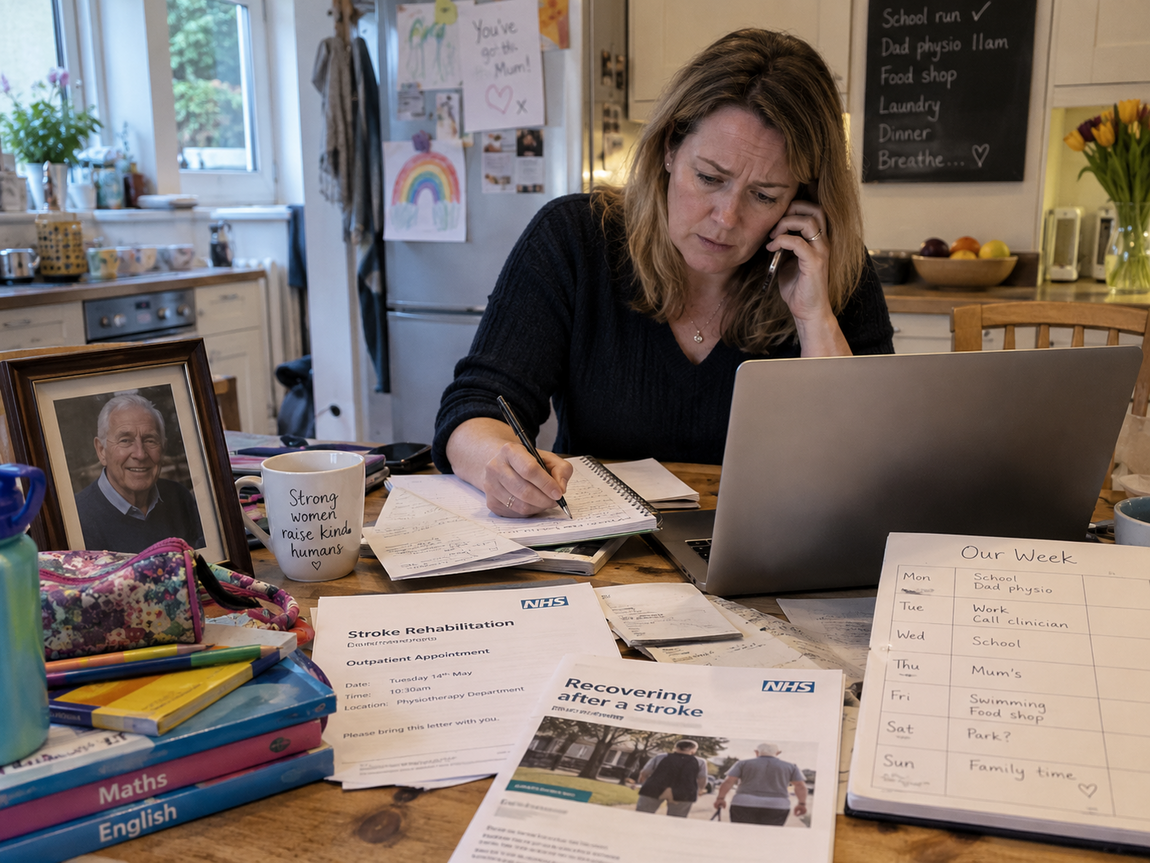
And somewhere in the middle of all of that, you still have work, children, school runs, dinner, laundry and your own home to keep going.
This is the part of stroke recovery families are often not prepared for.
Leaving hospital does not mean everyday life is back to normal.
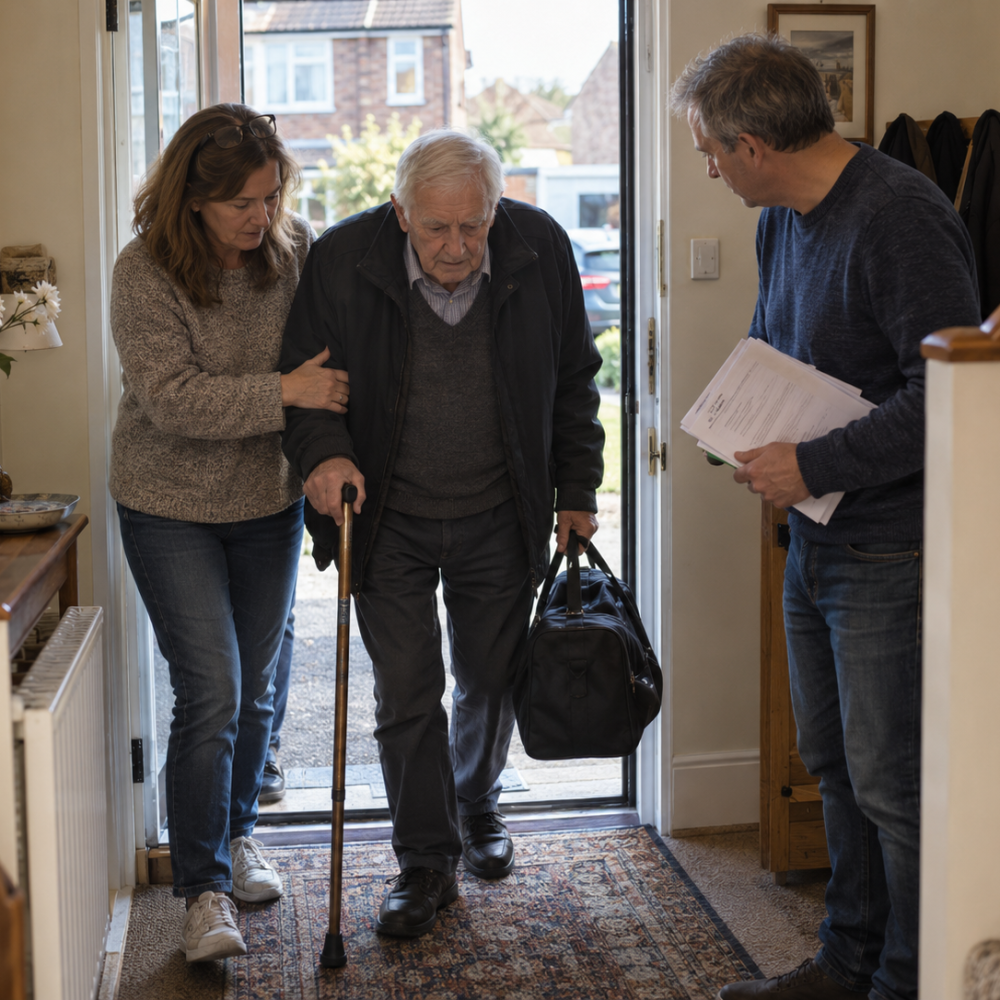
Sometimes it is only when the front door closes that you realise how much help Mum or Dad may still need.
The stroke happened to your parent. The impact reaches the whole family.
Before the stroke, you might have called Mum on your way home from work.
Now you're calling to check whether she has eaten.
You used to pop in for a coffee.
Now you're checking the fridge, sorting tablets, putting a wash on and working out who can take her to Thursday's appointment.
Your brother says he can help at the weekend.
Your partner is covering the school run while you finish work early.
You are answering messages from the hospital in between meetings.
Nobody sat down and decided that you would become the person holding everything together.
It just happened.
And at first, you manage.
Because it is Mum.
Because Dad needs you.
Because you tell yourself it is only for a few days.
But those few days can very quickly become a routine that depends almost entirely on you.
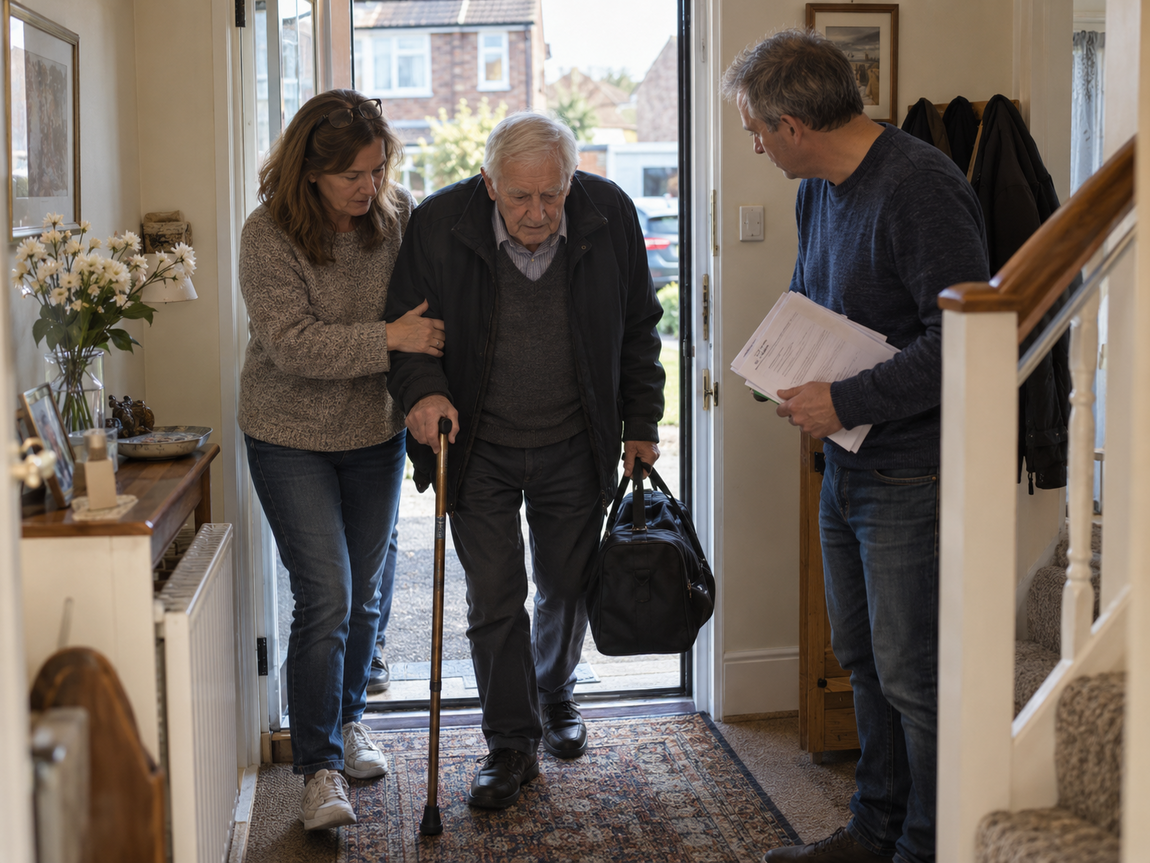
Start with one question: what happens when you are not there?
This is often much more useful than asking:
"Can Mum manage at home?"
Because "managing" can mean very different things.
Mum might be able to make a sandwich.
But does she have enough energy to make one after getting washed and dressed?
Dad might know when his medication is due.
But does he remember consistently when he is tired?
Mum may be physically capable of going to the shop.
But has she actually been out since the stroke?
Instead, look at the parts of the day when nobody is there.
What happens at lunchtime while you are working?
What happens after an appointment when Dad is exhausted?
What happens when the fridge is nearly empty?
What happens if Mum does not feel confident getting into the shower?
Those gaps tell you where support might actually be needed.
Don't underestimate how exhausting an ordinary day can become
Post-stroke fatigue can have a huge impact on everyday life.
Someone may get up, have breakfast, get dressed and attend an appointment.
From the outside, that can look like a really good morning.
But they may have very little energy left afterwards.
And this is where families can accidentally expect too much because the person appears capable.
A better question is:
If Dad uses his energy doing this, what will he have left for the rest of the day?
If physiotherapy is in the morning, lunch might need to be prepared for him.
If getting washed takes a lot of energy, shopping might need to wait.
If an appointment has taken most of the afternoon, dinner shouldn't become another mountain to climb.
Practical support isn't always about doing more for someone.
Sometimes it's about helping them save their energy for the things that matter most.
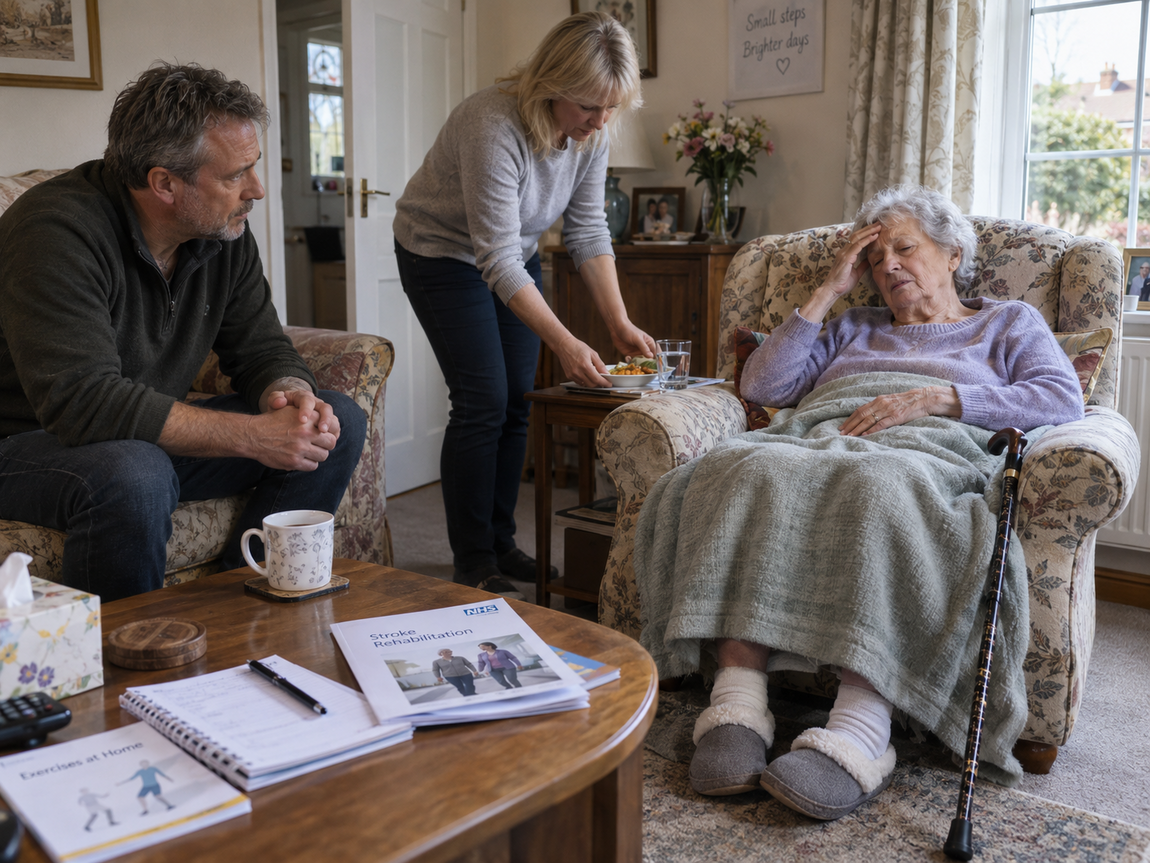
A full fridge doesn't mean Mum is eating
This is one of those things families often discover later.
You did the shopping.
There is food in the fridge.
You know Mum can make something simple.
So meals feel covered.
Then you visit and realise very little has been touched.
After a stroke, preparing food may involve far more effort than before.
Choosing what to eat.
Getting ingredients out.
Standing in the kitchen.
Preparing it.
Making a drink.
Carrying everything through.
Clearing up afterwards.
When somebody is tired, the easiest option can become not eating at all.
That is why the better question is not:
"Is there food in the house?"
It's:
"What is actually being eaten when nobody is here?"
If swallowing has been affected by the stroke, always follow the advice given by the appropriate healthcare professionals.
But when the difficulty is practical, somebody being there to prepare lunch, make a drink and sit down for some company can make mealtimes much easier.
Support should protect independence, not remove it
Perhaps Mum has always been fiercely independent.
You already know what she is going to say.
"I don't need looking after."
And she may be right.
She may not need somebody to take over.
She may need somebody to make certain parts of the day easier while she continues doing everything she can for herself.
There is a big difference.
Good support asks:
- What can you do?
- What would you like help with?
- How do you normally like this done?
Mum might choose her own clothes and dress herself but need more time.
Dad might make his own breakfast but appreciate somebody preparing lunch later.
Mum may be ready to start going out again but not feel confident doing it alone.
The aim shouldn't be to make somebody dependent on support.
The aim is to help everyday life feel manageable enough for independence to continue.
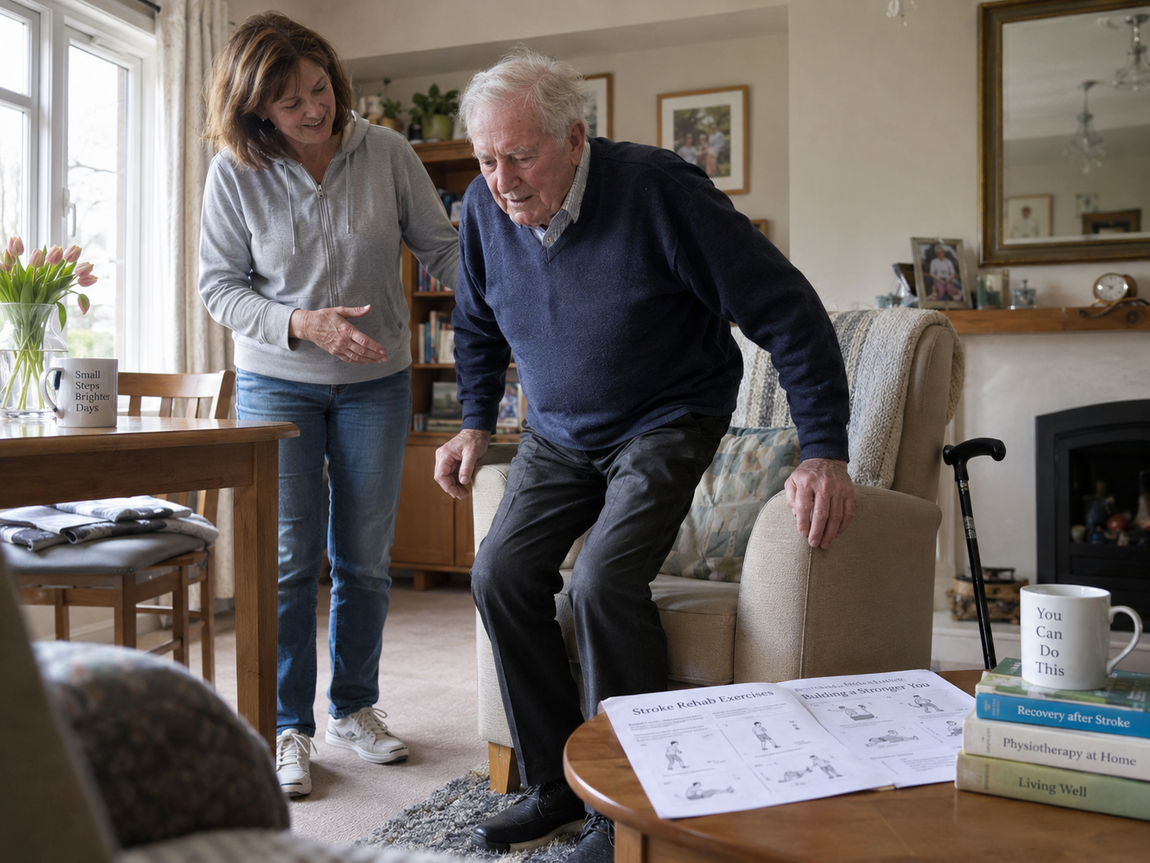
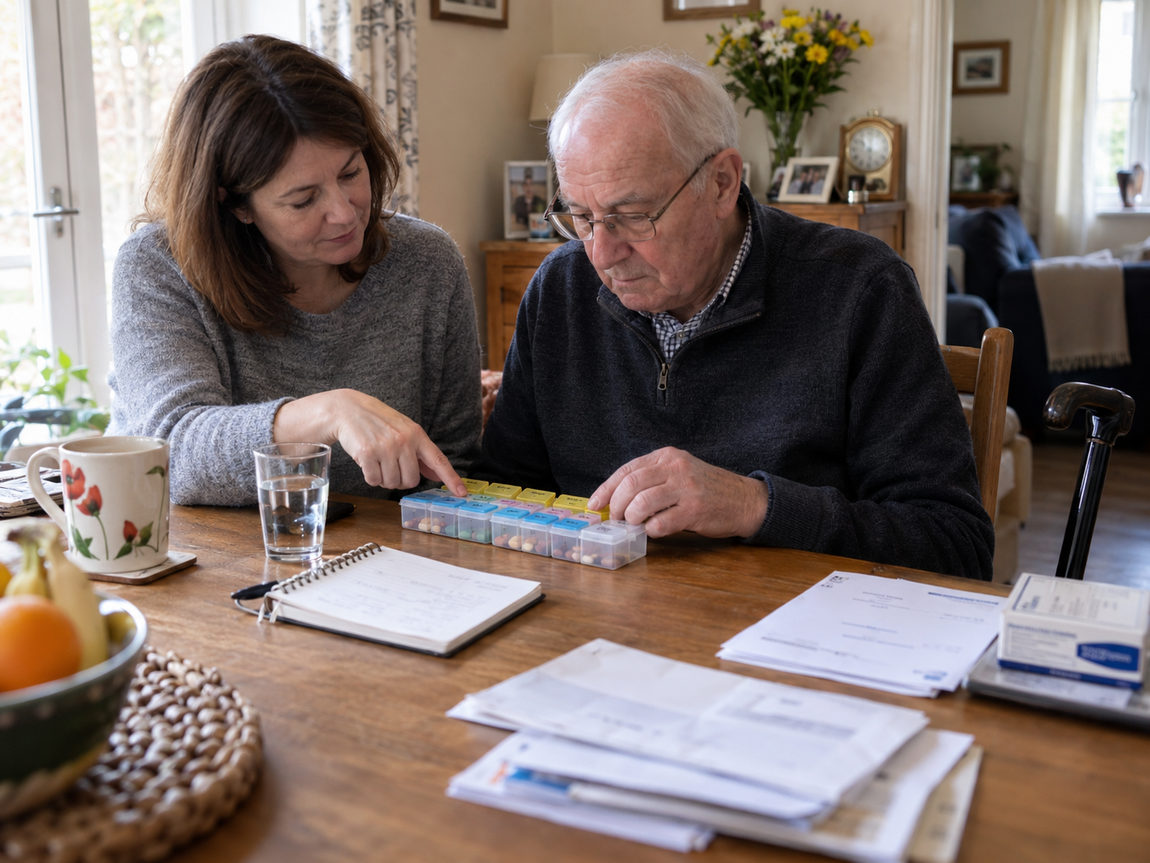
And then there is the medication
You remind Dad in the morning.
Your sister calls at lunchtime.
Dad can't remember whether somebody already reminded him.
You start wondering about it during work.
So you call again.
Medication can quickly become another thing sitting in the back of your mind all day.
After a stroke, medication may also have changed, which makes having one clear routine even more important.
Keep an up-to-date medication list and follow the instructions provided by the relevant healthcare professionals.
Where appropriate, a Personal Assistant can provide agreed medication prompts as part of the visit.
Clinical questions, medication changes, side effects and concerns should always go back to the appropriate healthcare professional.
But the everyday routine does not have to depend on you remembering to make another phone call between meetings.
Recovery is about confidence too
Sometimes the biggest change after a stroke isn't whether somebody can do something.
It's whether they feel confident enough to try.
Before the stroke, Dad walked to the shop without thinking about it.
Now he worries about getting tired halfway there.
Mum used to go for coffee on her own.
Now she would rather stay home because she is worried about feeling unsteady.
So the outings stop.
Then confidence drops further.
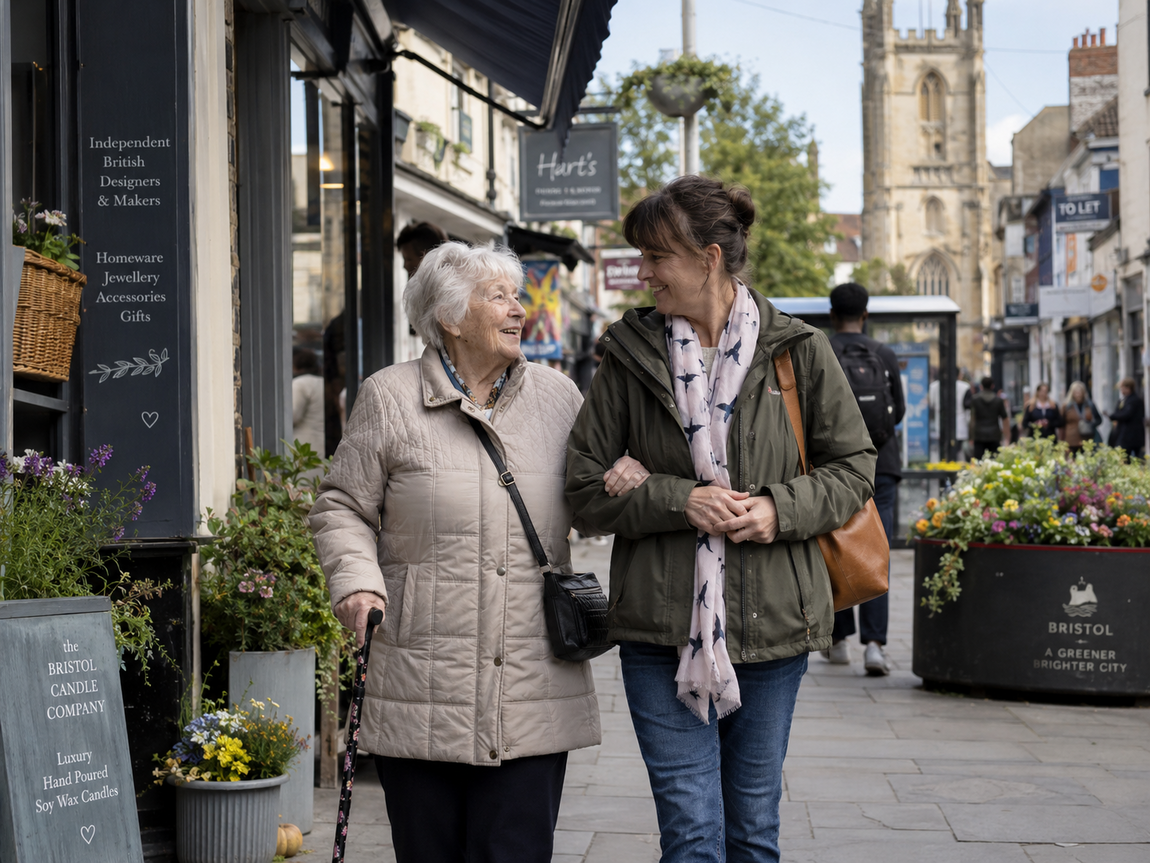
Getting back out might start with somebody simply going alongside them.
A coffee.
Picking up a few groceries.
Attending an appointment.
Nothing dramatic.
Just ordinary life beginning to feel possible again.
And you shouldn't necessarily have to take annual leave every time that happens.
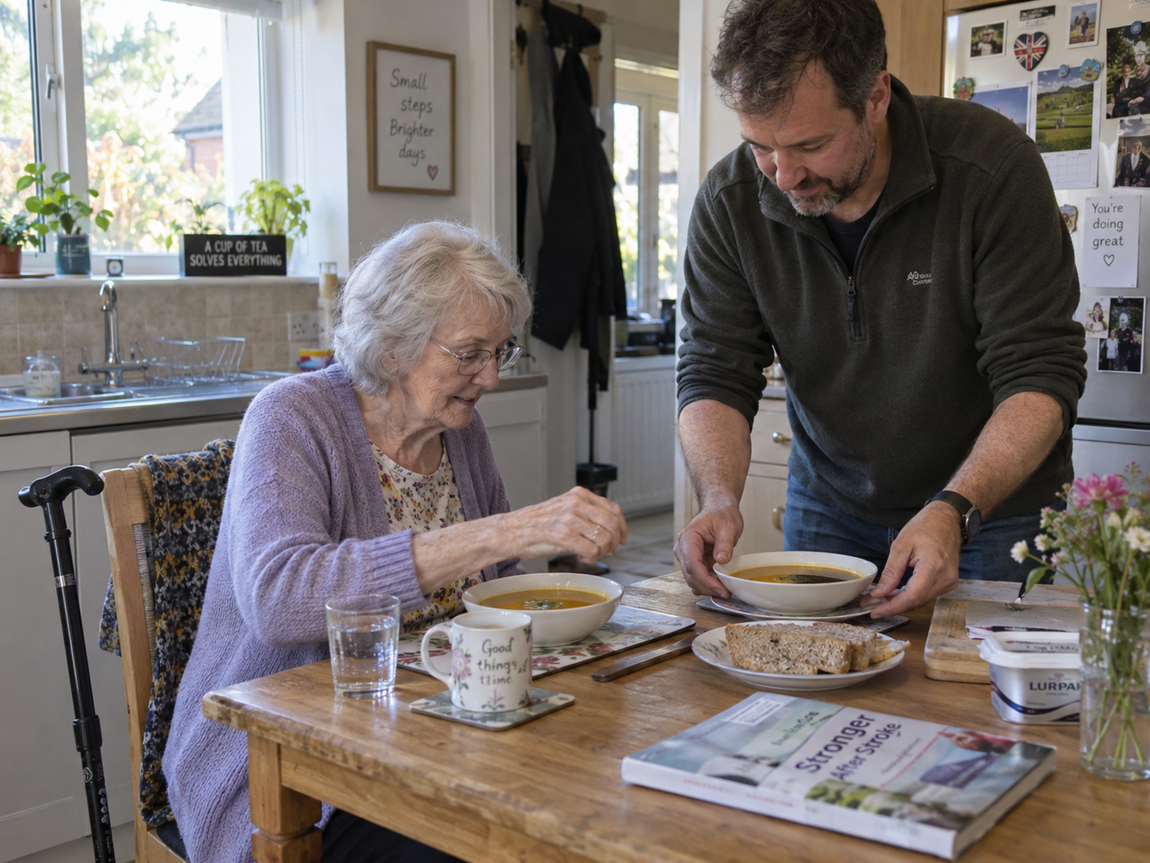
This is where many families realise they need another pair of hands
Not because everything has fallen apart.
Not because Mum can't cope.
Not because Dad needs somebody doing everything for him.
Because the current plan depends too heavily on one family member.
Usually the person reading articles like this one.
You.
If your week is becoming a constant cycle of checking, reminding, organising, shopping, driving and worrying, pay attention to that.
Support doesn't have to start when you are exhausted.
It can start before you get there.
What could support after a stroke actually look like?
At Your Care, support is built around the person rather than a fixed list of tasks.
A matched Personal Assistant might help Mum or Dad with:
- preparing meals and drinks
- medication prompts
- shopping and everyday errands
- light household tasks
- getting to appointments
- regular wellbeing check-ins
- getting outside again
- rebuilding confidence with everyday routines
You don't necessarily need support every day.
Start with the pressure point.
What part of the week is currently causing the most worry?
If it's lunchtime while you are working, start there.
If it's getting washed in the morning, start there.
If Dad has stopped leaving the house, start there.
If you are driving across Bristol three evenings a week just to check everything is okay, start there.
You don't need to solve the entire future to make next week easier.
You are still their daughter or son
This may be the most important part.
Think about your last few visits.
How much of your time together was spent asking questions like:
- "Have you eaten?"
- "Have you taken your tablets?"
- "What did they say at the appointment?"
- "Do you need shopping?"
- "Have you had a shower?"
- "When did you last have a drink?"
Those questions come from love.
But when every visit becomes a checklist, something changes.
You become the organiser.
The checker.
The person responsible for keeping everything moving.
And they become the person being checked.
Practical support can carry some of those jobs.
Which means you can sometimes walk through the door and simply say:
"Fancy a cuppa?"
That matters too.
Stroke support available in Bristol and South Gloucestershire
Alongside practical home support, families can also access specialist stroke services locally.
Sirona Integrated Community Stroke Service - can provide stroke rehabilitation, advice and support following discharge.
Bristol After Stroke - provides practical, emotional and community support for people affected by stroke across Bristol and South Gloucestershire.
The Stroke Association - also provides stroke information and support nationally.
Your discharge or rehabilitation team can help you understand which clinical services are involved in your parent’s recovery.
Know FAST
If Mum or Dad develops new symptoms of a stroke, call 999.
Remember FAST:
Face: Has one side of their face dropped?
Arms: Can they lift both arms and keep them raised?
Speech: Is their speech slurred or difficult to understand?
Time: Call 999 immediately.
Don't wait to see if the symptoms improve.
You don't need to wait until you can't cope
There is a point many families reach where they finally say:
"We need some help."
Usually, they have known it for weeks.
They were just waiting for things to get bad enough to justify it.
You do not need to do that.
If your parent is recovering after a stroke, you can put practical support in place while they are rebuilding strength and confidence.
You can still visit.
You can still help.
You can still be involved.
But the whole plan doesn't have to depend on you being available every hour of the week.
If Mum or Dad is recovering after a stroke in Bristol or South Gloucestershire, tell us which part of everyday life is becoming difficult.
Call Your Care on 0117 947 7422.
We can talk through what is happening now and where a matched Personal Assistant could make the biggest difference.
You don't have to arrange everything today. Start with the part that is putting the most pressure on your family.
Thoughtful care from our family to yours.