

posted 20th January 2026
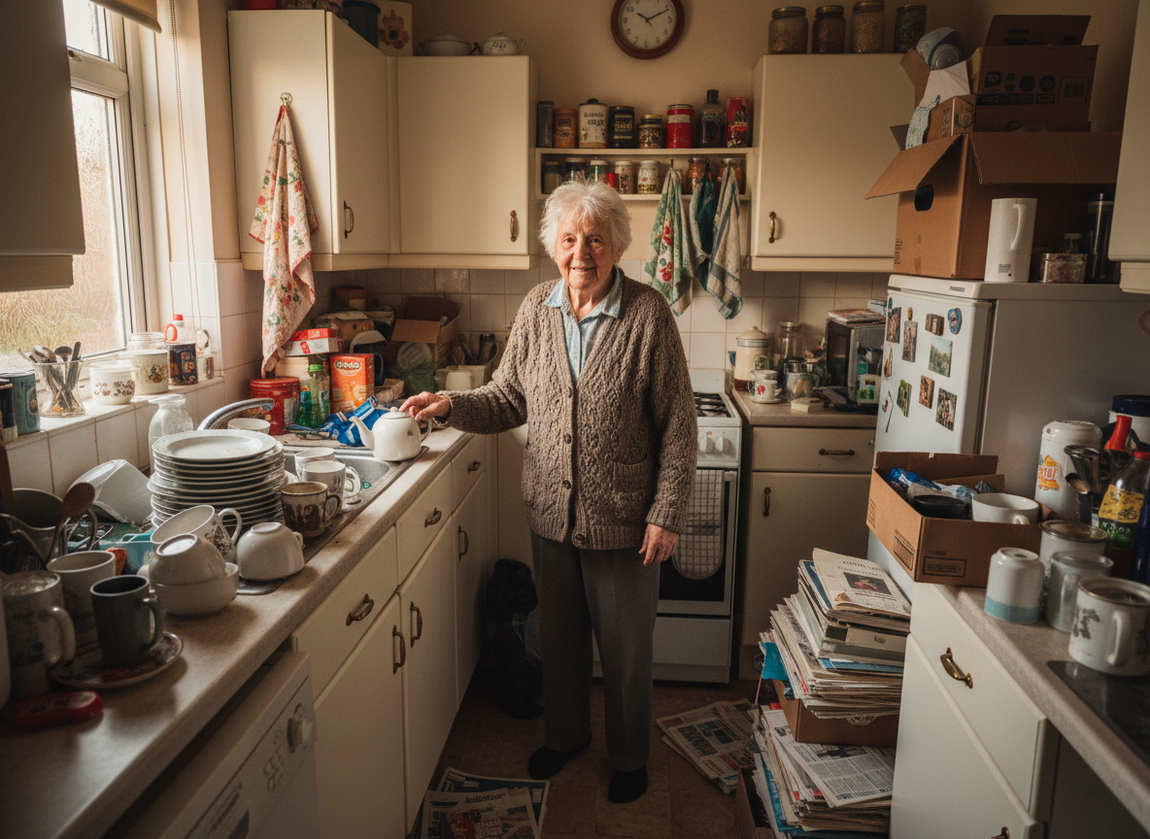
You open your mum’s front door and your chest tightens before you’ve even stepped inside. The hallway feels narrower again. There are more bags, more boxes and more things she’s “keeping just in case”. You smile and say hello, but inside you feel a knot of worry. You don’t want to upset her and you don’t want an argument, but you can’t pretend you didn’t see the trip hazards, the blocked radiator or the pile of letters she keeps shuffling from one surface to another. The thought that keeps you awake at night is simple: if something happens in this house, you’ll never forgive yourself. If you feel like this, you’re not being harsh. You’re being human. And you’re definitely not alone.
Families often tell us they end up walking on eggshells because they dread the clutter conversation. They know it’s a safety issue, but they also know the conversation never goes well. They’re torn between wanting Mum to stay safe and wanting to keep the peace. That tension is exhausting, and it’s one of the main reasons families wait until things feel out of control before they ask for help.
Why This Is Happening (And Why Logic Doesn’t Work)
When clutter starts to build up, families often try to deal with it using logic. They point out duplicates, unused items or things that haven’t been touched in years. But clutter in older adults isn’t usually about logic. It’s emotional. It might be fear of losing things, fear of change or fear of not having enough. It might be linked to grief or loneliness. If dementia is involved, it may affect judgement, memory or the ability to make decisions. For many older people, belongings create a sense of comfort and control at a time when other parts of their life feel less predictable.
Once you realise the clutter isn’t really about the clutter, it changes everything. You’re not trying to win an argument about belongings. You’re supporting someone who’s trying to feel safe.
The Part Families Find Hardest: How Do You Even Start the Conversation?
This is the part almost every family struggles with. You can see the risks clearly and you feel the urgency, but the moment you bring it up, your mum becomes defensive or upset. That’s because clutter often feels emotionally safe to her, even though it looks unsafe to you. Clearing it feels like losing control, losing memories or opening the door to unwanted change.
The aim isn’t to “tell her what to do”. The aim is to start the conversation in a way that protects her dignity and keeps her calm.
A softer approach often makes all the difference. Instead of “We need to tidy”, try leading with concern rather than criticism. You might say, “Mum, I know your things matter to you. I’m just worried about you being able to move around safely. Could we look at one small area together?” You can also use a real-life prompt. For example, “When the postman struggled to get the post through the letterbox yesterday because of everything in front of it, it made me realise how important it is that people can reach you quickly.”
Making the conversation about her comfort rather than your preference works far better. You could say, “I want you to be able to reach everything you love easily. Can we make a bit more space around your favourite chair?” Offering choice helps her feel in control. For instance, “Which corner should we start with, this one or the one by the cupboard?” And avoid saying “throw away”. Say “donate or pass on”, which feels far less threatening.
The Real Safety Risks (And Why Your Worry Makes Sense)
A cluttered home isn’t just a bit untidy. It can very quickly become unsafe. Piles of belongings create trip hazards that can lead to falls, and even a small fall can change everything for an older person. Clutter can block access for paramedics if your mum ever needed urgent help. It can also block escape routes and make it harder for firefighters to reach someone in a fire. Hidden food, damp or pests can cause infections or breathing problems. Heating systems often can’t work properly when vents or radiators are blocked. Even everyday tasks like preparing meals, getting to the bathroom or finding important documents become far more difficult.
You’re not imagining the risks. You’re noticing things your mum can’t see or emotionally can’t face. Your concern comes from a place of love, and it’s completely justified.
Letting Go of the Guilt
Many adult children tell us they feel guilty for even mentioning decluttering. They worry they’re upsetting their mum or taking over. But helping someone stay safe at home isn’t controlling. It’s caring. Encouraging small changes now can prevent bigger problems later. You’re not being unkind. You’re being protective. And there’s a big difference.
How to Help Without Causing Conflict
The key is small steps, patience and working with your mum rather than trying to fix everything for her. Start with one tiny area, like a drawer or a single shelf. Small wins build confidence and reduce overwhelm. Always ask rather than tell. “Could we tidy this bit so your walker fits through?” feels collaborative. “You need to clean this up” feels like an attack. Recognise the emotions behind the belongings. You could say, “I know this is hard, and I’m not trying to take anything important from you. Let’s keep the things you love most.” Work at her pace and never rush her. Rushing creates resistance.
There are also a few things to avoid. Never throw things away secretly. It breaks trust and makes anxiety worse. Avoid shame or criticism. It only creates defensiveness. And don’t ignore the emotions behind the clutter. Once you support the emotional side, the practical side becomes much easier.
A Simple Step-by-Step Approach
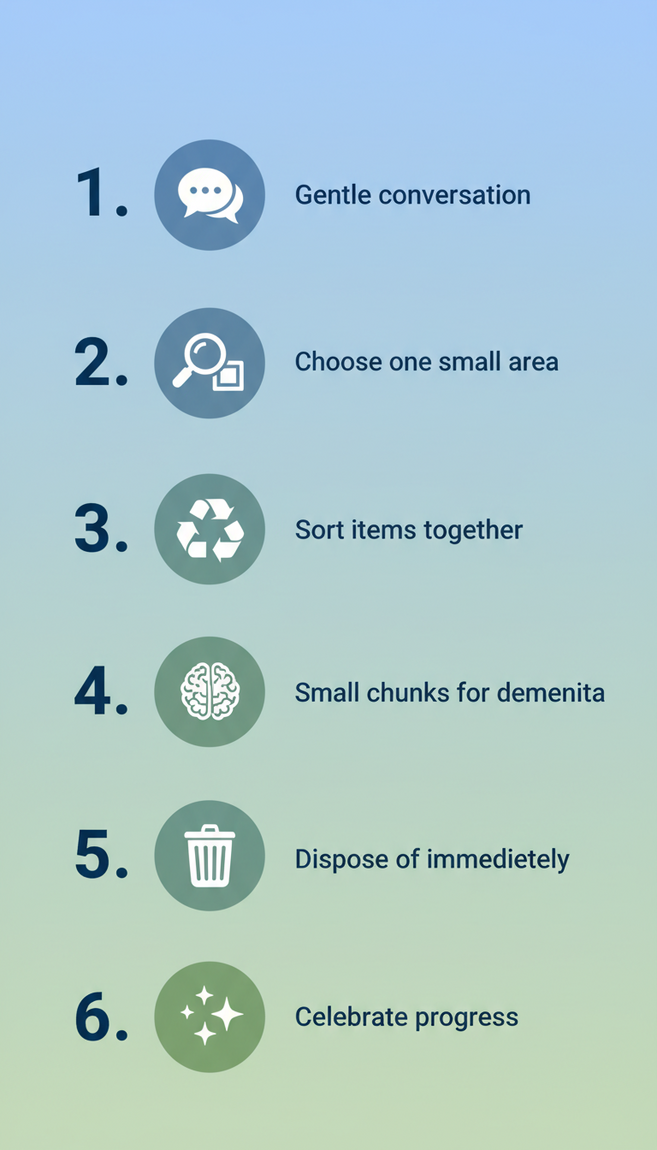
Start with a gentle conversation during a calm moment, perhaps over a cup of tea. Begin with how you feel, not what she’s doing wrong. You could say, “I’m worried about you being safe here. Could we clear just this pathway together?” Choose one small area and finish it together so you both feel a sense of progress. Sort items into “keep, donate or pass on” and let her make the decisions. When something’s agreed to go, take it away straight away, that same day. If bags sit by the door, they often get reopened and things go back inside. And always celebrate progress. “We did well today. It looks so much safer already” helps her feel proud rather than criticised.
If dementia is involved, the process needs to be broken into tiny steps, maybe ten or fifteen minutes at a time. Keep familiar items visible and don’t move everything at once. Predictability reduces anxiety.
When It’s Time to Ask for Extra Support
Sometimes the situation becomes too big for families to manage alone. That doesn’t mean you’ve failed. It simply means the job now needs more hands or specialist support. You may need help if there are hygiene issues, pests, structural damage or serious safety concerns. You might also need help if discussions are turning into arguments, or if your mum is feeling overwhelmed. And if dementia is affecting her judgement, a professional assessment can really help.
You can speak to your GP, who may refer to mental health or social care teams. Your local authority’s adult social care department can carry out a needs assessment. Organisations like Age UK and Carers UK also provide advice and support.
You Don't Have to Manage This Alone
Supporting a loved one who's struggling to let things go is emotionally draining. You're balancing love with safety, patience with worry and the desire to protect their independence with the need to prevent harm. The goal isn't a perfect home. It's a safer home where your loved one can move around comfortably and maintain their dignity.
If your mum needs help with housework, meals, shopping or day-to-day tasks, Your Care can connect you with a self-employed carer, so you can find a solution that fits your situation and budget. There's no pressure and no judgement, just a calm conversation about what might help.
Call us on 0117 9477422. You don't have to do this on your own.