




posted 27th August 2026
The 4pm Problem: Why an Older Parent Can Seem Fine in the Morning but Struggle Later
It is often around 4pm when the phone rings.
Mum was perfectly chatty when you spoke to her that morning. She had taken her medication, made herself some toast and told you there was absolutely nothing to worry about.
But now she sounds confused.
She can't remember whether she has eaten. She is upset that nobody has visited, even though you were there at lunchtime. Perhaps she sounds anxious, angry or unusually tired. She might tell you she wants to “go home” when she is already sitting in her own living room.
You finish the call wondering how she could have changed so much in just a few hours.
The important thing to understand is that a person’s ability to cope can vary throughout the day. A difficult late afternoon doesn't necessarily mean they are pretending to be fine in the morning or that their needs have suddenly changed beyond recognition.
It may mean that several everyday pressures have built up as the day has gone on.

Why can late afternoon be so difficult?
By 4pm, an older person may already have spent several hours concentrating, remembering, making decisions and managing everyday tasks.
Things that appeared manageable that morning can become much harder when they are tired.
There may not be one single cause. Late-afternoon difficulty can be influenced by a combination of:
- Tiredness after navigating the day
- Not eating enough at lunchtime
- Dehydration
- Pain or physical discomfort
- Needing the toilet or being constipated
- Medication wearing off or causing side effects
- Loneliness after a quiet day at home
- Too much noise, activity or stimulation
- Reduced natural light and shadows forming in the home
- Worry about what is happening next
- Changes associated with dementia
Some people living with dementia experience increased confusion, anxiety or agitation during the late afternoon or evening. This is sometimes called sundowning, although it isn't always directly connected to the sun setting and can affect people differently.
The Alzheimer’s Society explains that sundowning may include distress, agitation, hallucinations or beliefs that don't reflect what is happening around the person.
However, it is important not to assume that every late-afternoon change is simply part of dementia.

Look for the need behind the behaviour
If Dad begins pacing around the house at 4.30pm, he may not be “being difficult”. He could be uncomfortable, hungry or worried that he needs to leave for something.
If Mum repeatedly calls you, she may have forgotten your earlier conversation. But she might also be feeling frightened because the house has become darker and less familiar.
Rather than beginning with, “Why are they behaving like this?”, it can be more helpful to ask:
What might they need right now?
Try checking the basics:
- Have they eaten recently?
- Have they had enough to drink?
- Could they be in pain?
- Do they need the toilet?
- Is the room too hot, cold, dark or noisy?
- Are their glasses and hearing aids available and working?
- Are they worried about an appointment or change in routine?
- Have they had any company today?
- Has anything changed with their medication?
The answer may not always be obvious, but looking for an unmet need gives you somewhere practical to start.
Keep a record for seven days
Patterns can be difficult to spot when every afternoon feels stressful.
For one week, make a short note of:
- What time the change began
- What the person had eaten and drunk
- When medication was taken
- Whether they had slept during the day
- Any signs of pain, illness or constipation
- What the room and lighting were like
- Who had visited or called
- What the person was doing immediately beforehand
- What seemed to reassure them
- How long the difficult period lasted
You may discover that Mum becomes distressed on the days she misses lunch. Dad might struggle when he has been alone since the morning, or when the room becomes shadowy before anyone turns on the lights.
This information can also be useful when speaking to a GP, pharmacist or care professional.

Practical changes that may help
You do not have to change the entire day at once. Begin with one or two adjustments and record whether they make a difference.
Offer food before the difficult period
If problems regularly begin at 4pm, try offering a simple meal or substantial snack at around 3pm rather than waiting until the person says they are hungry.
This could be soup, toast, a sandwich, yoghurt, fruit or something familiar that they enjoy.
Keep drinks visible and within reach. Some people may need regular prompts because they no longer recognise thirst or remember when they last had a drink.
Change the lighting before daylight fades
Don't wait until the room is already dark.
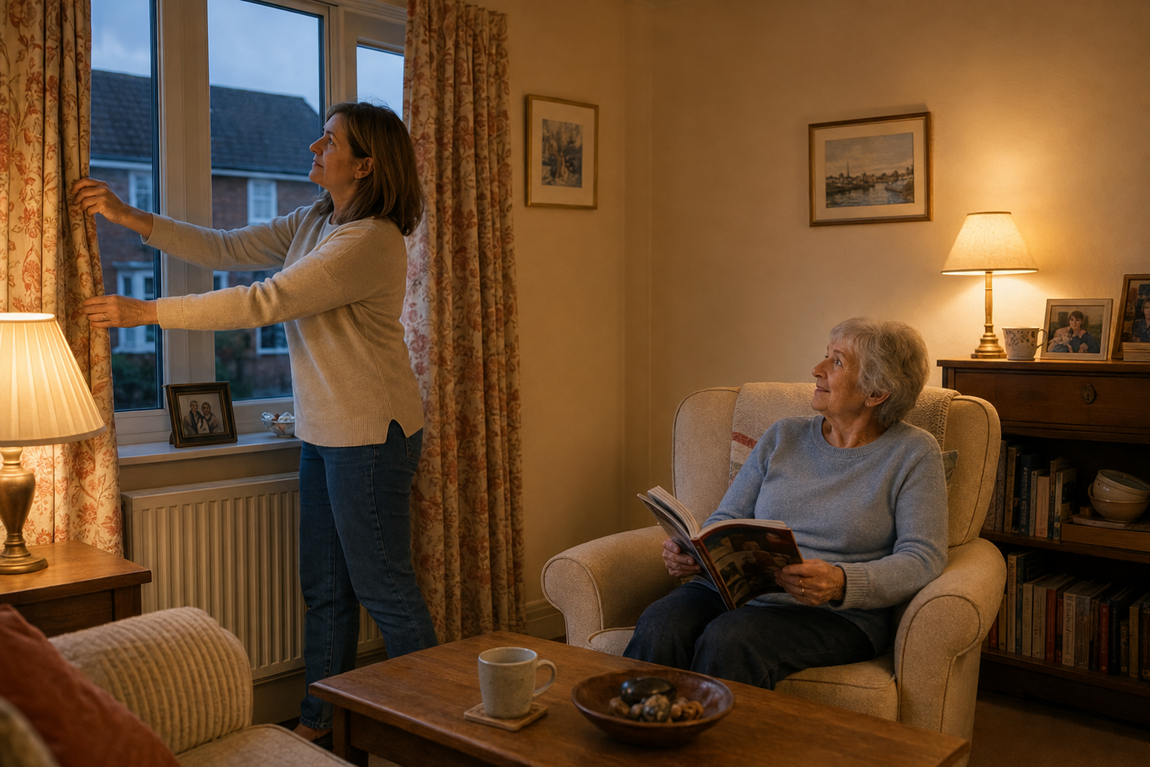
Open curtains fully during the day and switch on lamps before the natural light begins to fade. Check for reflections, dark corners and shadows that might be misinterpreted.
During colder and darker months, this may need to happen earlier than expected.
Protect the afternoon routine
Try to schedule demanding tasks, appointments and shopping trips for the part of the day when the person is usually at their best.
Later in the afternoon, familiar activities may work better. This could include listening to favourite music, folding towels, looking through photographs, preparing vegetables or watching a familiar television programme.
The aim is not to keep the person constantly occupied. It is to make the transition into the evening feel predictable and reassuring.
Think about company
Late afternoon is often the time when other people are travelling home, preparing dinner or collecting children. For an older person living alone, it can be one of the quietest and most isolating parts of the day.
A phone call can help, but it may not always be enough if the person needs food, medication prompts, reassurance or practical assistance.
A well-timed support visit could include:
- Preparing and sharing an early evening meal
- Encouraging drinks
- Prompting medication
- Closing curtains and switching on lights
- Helping the person change into comfortable clothes
- Providing company during the most difficult part of the day
- Making sure they feel settled before the evening
Support doesn't always need to begin first thing in the morning. Sometimes the most valuable visit is the one arranged for the hour when someone’s confidence and energy usually begin to fade.
When should you seek medical advice?
Speak to the person’s GP if the changes are becoming more frequent, gradually worsening or affecting their safety and wellbeing.
It is also worth requesting advice if you are concerned about:
- Pain or discomfort
- Poor food or fluid intake
- Constipation
- Sleep changes
- Low mood or increased anxiety
- Falls or problems with balance
- Medication side effects or timing
- Changes in memory or behaviour
A GP or pharmacist can review whether illness, pain or medication may be contributing.
If someone becomes suddenly confused, this requires urgent medical assessment. Sudden confusion can be caused by an infection, stroke, low blood sugar, medication or another medical problem. The NHS advises calling 999 or going to A&E when someone suddenly becomes confused.
Do not dismiss a sudden change as dementia or old age.

You are not imagining the difference
Families sometimes worry that professionals will not believe them because their parent appears capable during a morning appointment.
But both things can be true.
Mum may be able to hold a conversation and make breakfast at 10am, yet still need significant reassurance and practical help by late afternoon. Dad may manage a familiar morning routine but become overwhelmed once he is tired, hungry or alone.
A person’s most capable hour doesn't always show the full picture of how they are managing at home.
Recording what happens across the entire day can help you explain the situation clearly and arrange support around the time it is genuinely needed.
Support at the right time of day
At Your Care, we arrange unrushed home support around each person’s individual routine.
That could mean companionship, preparing a meal, prompting medication, helping with personal care or simply providing a familiar face during the part of the day that has become difficult.
Our aim is not to take over. It is to help the person feel safe, supported and more like themselves at home.
Download our free Seven-Day Late-Afternoon Pattern Tracker to record what happens, identify possible triggers and prepare for conversations with health professionals.
Or call 0117 947 7422to talk through the difficult part of the day and find out how a well-timed support visit could help.
Thoughtful care from our family to yours.