


posted 10th June 2026
Summer can feel like a lovely time of year.
The lighter evenings, warmer weather, brighter gardens and family holidays can all make life feel a little easier.
But for many older people, summer can quietly bring its own challenges.
And often, families do not realise until something has already started to slip.
Maybe Mum has not been drinking enough because she does not feel thirsty. Maybe Dad has skipped lunch as it felt too hot to cook. Maybe Nan has been sitting indoors all day with the curtains open while the house slowly gets warmer. Or perhaps an older neighbour has gone a few days without seeing anyone because their usual groups, visitors or routines have changed for the summer.
These things can sound small on their own. But for an older person, especially someone living alone, recovering from illness, feeling frail, managing a long-term condition, taking regular medication, or finding everyday tasks harder than they used to, the warmer months can have a much bigger impact than families expect.
At Your Care, we often speak to well-meaning families who say things like:
“I thought they would be fine because the weather was nice.”
“I did not realise they had not been eating properly.”
“They said they were okay, but when I visited, the house was boiling.”
“I only realised something was wrong when they seemed tired, wobbly and not quite themselves.”
That is why summer check-ins matter.
Not because families do not care. They absolutely do. But, life gets busy. Holidays happen. Schools break up. People go away. Regular groups may pause. Neighbours may be away more often. And older loved ones can be left with fewer natural check-ins than usual.
Heat can affect older people differently
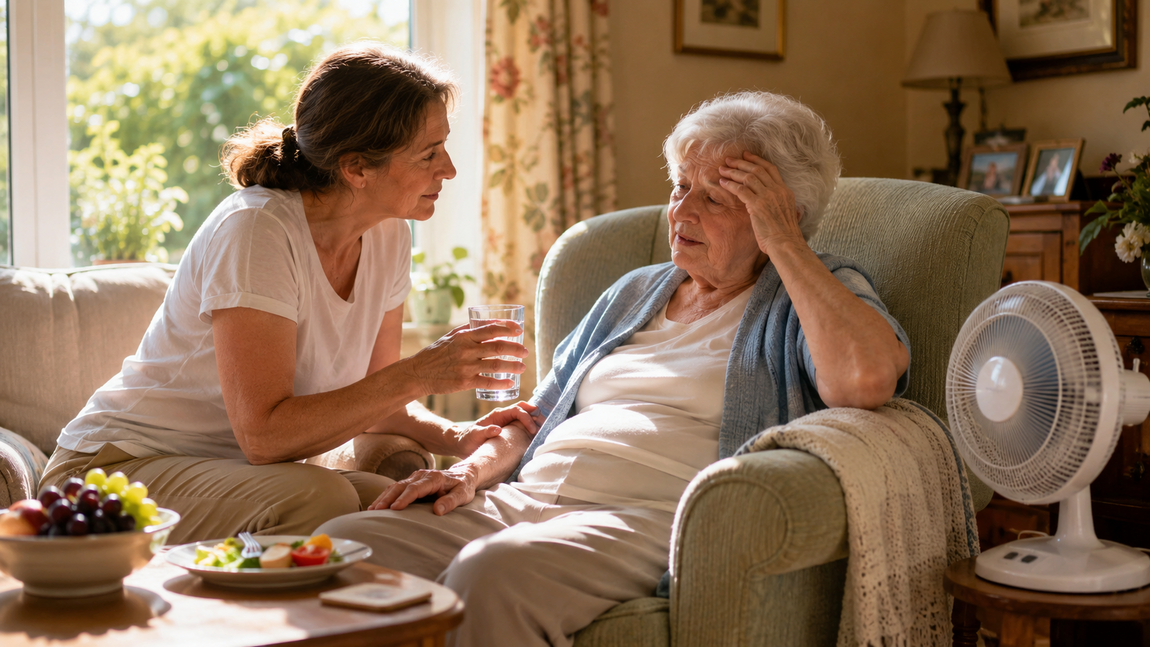
As we get older, the body can find it harder to manage changes in temperature.
An older person may not always feel hot in the same way. They may not feel thirsty until they are already dehydrated. They may also be less likely to open windows, change into cooler clothing, drink regularly, or move to a cooler part of the home without a little encouragement.
Some older people will simply keep doing what they have always done. Sitting in the same chair, even if the sun hits that room for most of the afternoon. Wearing extra layers because that feels familiar. Keeping curtains open even when the room is getting too warm. Not wanting to “make a fuss” by asking someone to bring shopping, check the fridge, or help them cool the house down.
While memory problems or dementia can make these changes harder to notice, many older people without dementia can struggle too, especially if they have reduced mobility, live alone, are recovering from illness, or are used to just getting on with things.
And for families, it can be worrying, as these changes can happen quickly.
One day, someone appears okay.
The next, they are not eating properly, sleeping badly, feeling weak, seeming muddled, feeling dizzy, or struggling to manage simple tasks.
Dehydration can be easy to miss
Dehydration is not always obvious.
It is not always someone clearly saying, “I am thirsty.”
Instead, it can show up as:
- Tiredness
- Headaches
- Dizziness
- Dry mouth
- Dark urine
- Constipation
- Muscle cramps
- Irritability
- Unsteadiness
- Confusion
- Or a general sense that someone is “not quite themselves.”
For older people, dehydration can also increase the risk of falls, urine infections, hospital admissions and feeling generally weaker.
Many older people do not drink enough at the best of times.
Some avoid drinking because they are worried about needing the toilet more often.
Some do not like water.
Some forget to drink regularly.
Some cannot easily get up to make a drink.
Some will happily make a cup of tea for someone else, but not think to drink enough themselves.
During warmer weather, this can quickly become a problem.
A simple wellbeing visit can make a real difference here. Not in a dramatic way, but in the everyday, practical way that matters.
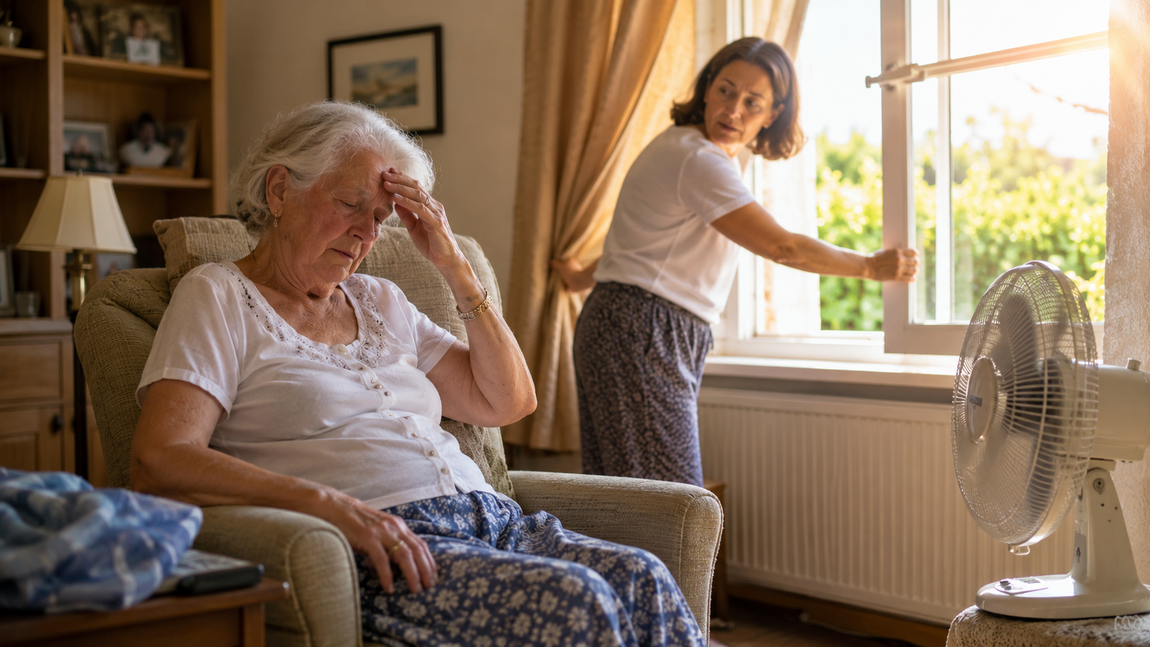
Someone popping in can make a cold drink, encourage fluids, check when they last had something to drink, notice if they seem more tired or unsteady, and make sure they are not trying to manage the heat alone.
Food, medication and routines can all be affected
When the weather is hot, appetites can change.
An older person who usually enjoys a hot meal may suddenly not fancy cooking.
The kitchen may feel too warm.
Standing for long periods may feel exhausting.
Shopping may be harder.
Food may go off more quickly.
The fridge may not be stocked properly.
Sandwiches, snacks or biscuits may quietly replace proper meals.
This may not look serious at first. But if someone is already frail, losing weight, recovering from illness, living with a long-term condition, or taking medication that needs to be taken with food, it can matter.
Medication can also be something to keep an eye on during warmer weather. Some medicines can increase the risk of dehydration or affect how the body copes with heat.
This does not mean families should stop or change medication, but it is worth being aware and speaking to a pharmacist, GP or NHS 111 if you are worried.
Families may want to check:
- Is medication being taken correctly?
- Are tablets being stored safely and away from heat?
- Is your loved one drinking enough?
- Are they eating enough?
- Are they suddenly more dizzy, confused, weak or unwell?
- Have they had recent sickness, diarrhoea, or reduced appetite?
Sometimes, families assume the main summer concern is sunburn. But for many older people, the bigger worry is what is happening quietly indoors.
A warm house, not enough fluids, missed meals, medication, reduced routine and less contact can all build up.
Loneliness can feel sharper in summer
When people talk about loneliness, they often think of winter. Cold days, dark evenings, Christmas, bad weather and people staying indoors.
But summer can be lonely too.
In fact, for some older people, it can feel even harder.
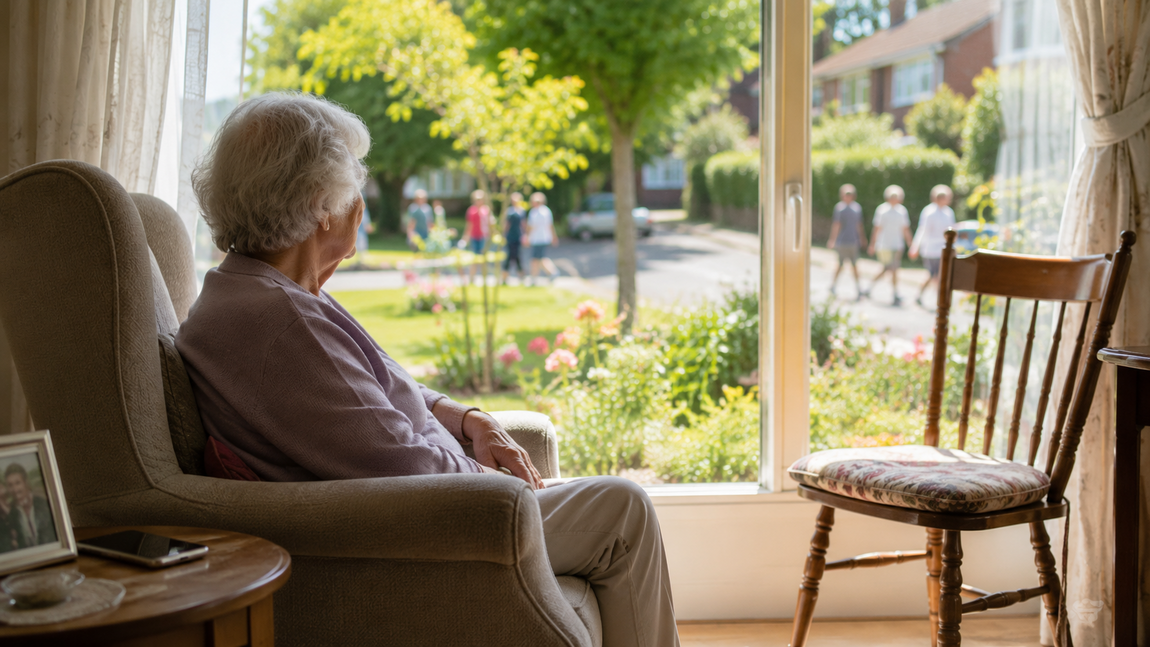
When everyone else seems to be out enjoying themselves, loneliness can feel sharper. Families may be away on holiday. Regular groups may pause. Neighbours may be busy. Grandchildren may be on different routines. Usual phone calls may happen less often.
An older person may see the world getting busier outside, while their own days stay very quiet.
And if they are less confident going out, worried about falls, unable to manage public transport, feeling tired in the heat, or anxious about being out alone, they may end up spending long stretches of time indoors.
This can affect mood, confidence, appetite, sleep and motivation.
A regular visit gives someone something to look forward to. A familiar face. A proper conversation. A reason to get up, get dressed, have a drink, eat something, open the curtains, sit in the garden safely, or take a short walk if appropriate.
Sometimes, companionship is the difference between someone simply getting through the day and actually feeling part of the world.
Family holidays can leave gaps
Most families do not want to admit this, but summer holidays can bring guilt.
You want to go away. You need a break. Your children are excited. You have looked forward to it for months.
But then there is that worry in the back of your mind.
Will Mum be okay?
Will Dad remember to eat?
Who will check the house is not too hot?
What if they run out of food?
What if they forget medication?
What if they have a fall?
What if they say they are fine, but they are not?
Many families try to patch things together. A neighbour popping in once. A quick phone call. A sibling checking when they can. A friend picking up shopping.
But it can still feel fragile.
A planned wellbeing visit can give families peace of mind while they are away. It means someone familiar and trusted is going in, not just to complete a task, but to properly check how things are.
Are they drinking? Are they eating? Are they managing in the heat? Are they settled? Does anything feel different? Is the home safe and comfortable? Do they need anything?
That reassurance can make a huge difference to families who are trying to rest, while still caring deeply from a distance.
Signs your loved one may need more support this summer
It may be worth arranging extra check-ins if you notice:
- They seem more tired, dizzy or muddled than usual.
- The house feels very hot when you visit.
- They are not drinking much.
- They are eating less or losing weight.
- Food is going out of date or not being replaced.
- Meals are being left untouched.
- They are wearing unsuitable clothing for the weather.
- They seem more withdrawn or low in mood.
- They are missing medication or taking it incorrectly.
- They have had a recent fall or near miss.
- They are avoiding going out completely.
- They seem anxious when their routine changes.
- They are relying heavily on one family member.
- You are going away and feel worried about leaving them without support.
You do not need to wait for a crisis before putting help in place.
In fact, the best time to arrange support is often before everything becomes urgent.
A small visit can prevent a bigger worry
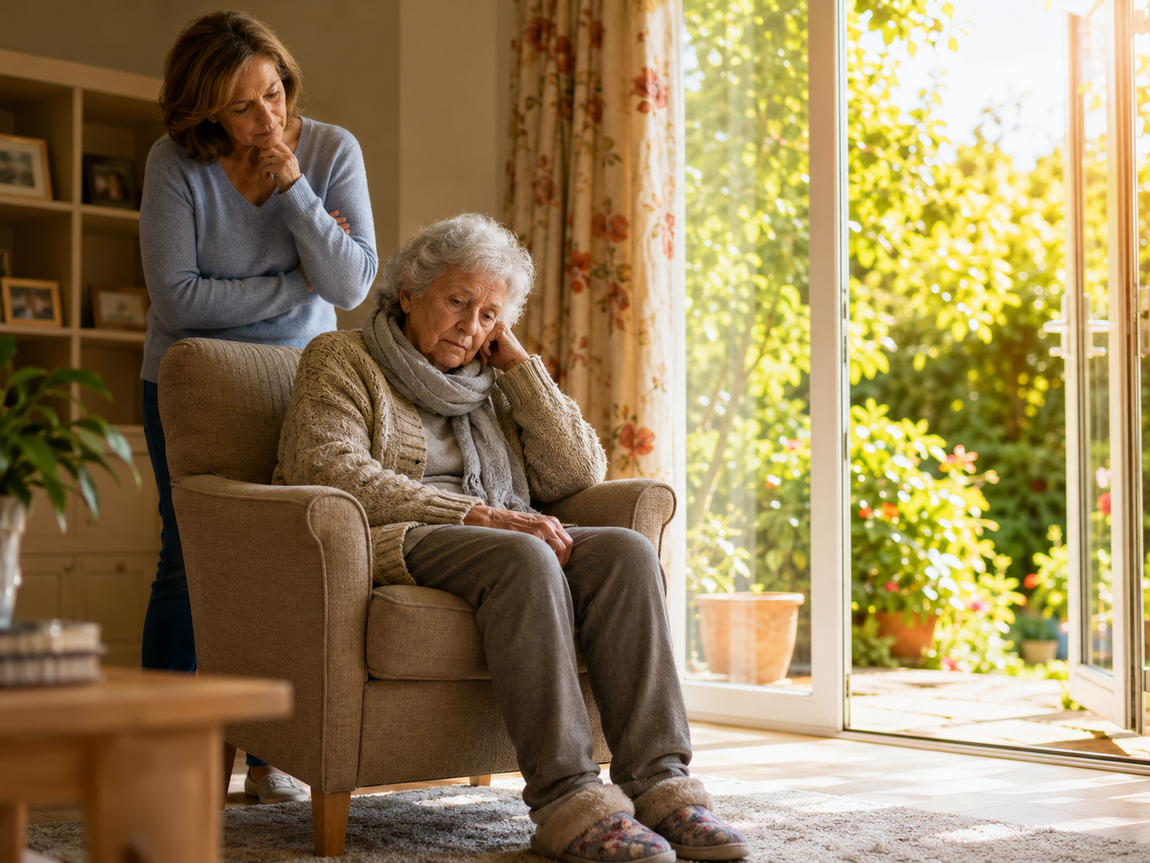
Families often feel they have to wait until things are really bad before asking for help.
But support does not have to start with a crisis.
It can start with Mum needing someone to pop in twice a week while you are at work.
It can start with Dad needing someone to make sure he is eating and drinking in the heat.
It can start with Nan needing company while the family are away.
It can start with a simple wellbeing check because something in your gut says, “I just want to know someone has seen them today.”
That is enough.
You do not need to justify wanting peace of mind. You do not need to wait until someone has fallen, become unwell, or stopped coping.
Sometimes, the right support at the right time keeps everything feeling more manageable.

At Your Care, we support people at home with friendly, familiar and practical visits that are built around the person.
That might be help with meals, medication prompts, companionship, domestic tasks, shopping, personal care, getting out and about, or simply having someone kind and reliable checking in.
During the summer months, these visits can be a real comfort for families who are juggling work, school holidays, family plans, caring responsibilities and worry.
Whether your loved one needs regular support, a few extra visits while you are away, or just someone to check in during the warmer weather, we can talk through what might work.
Because summer should feel lighter.
And with the right support in place, families can feel reassured that their loved one is not managing it all alone.
If you are worried about an older loved one this summer, give us a call to talk through afternoon or wellbeing visits across Bristol, South Gloucestershire and surrounding areas.